

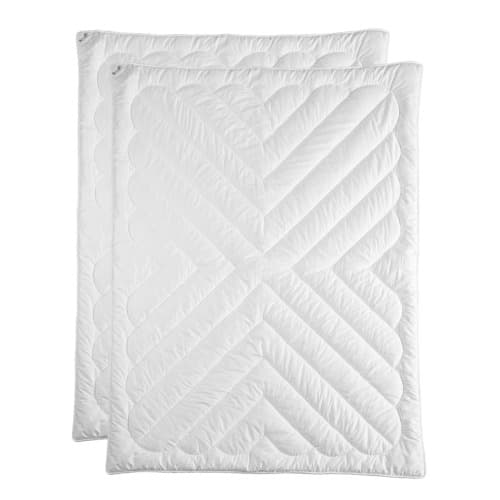
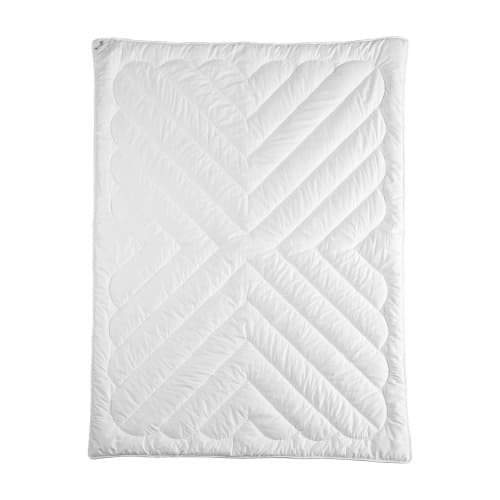
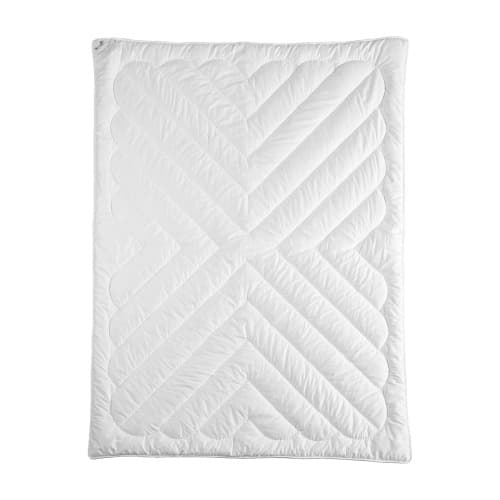
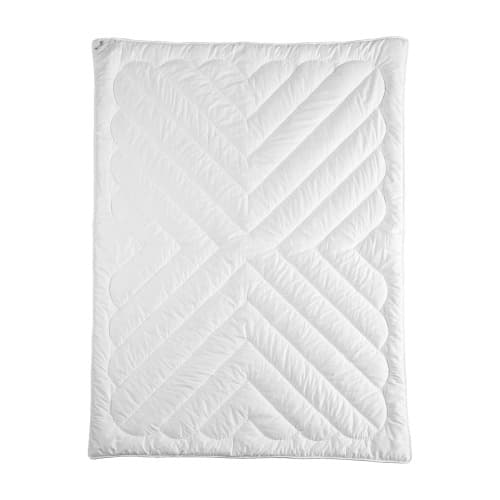
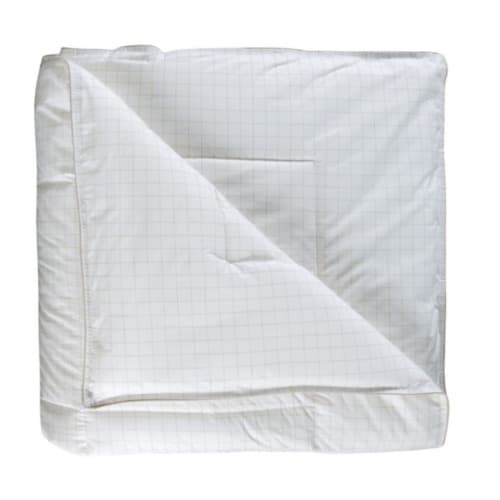
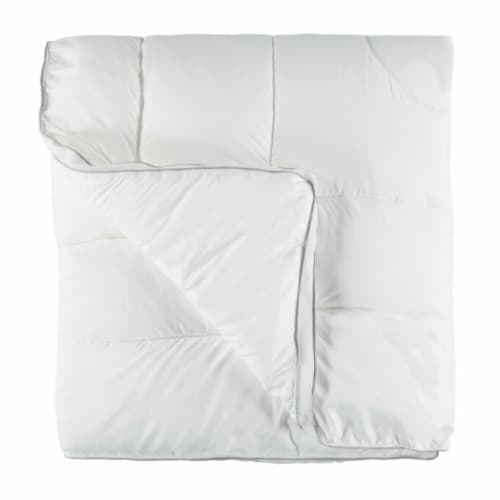
A duvet that is neither too cold nor too hot
A good duvet warms without overheating, wicks moisture and does not clump over time. Which one to choose depends on how warm your bedroom is, whether you get cold easily and which filling you prefer.
How to choose the warmth
- Summer — thin and light, for the warm months and for people who usually feel too hot.
- All-season — in a Central European climate it is enough for most of the year. If you are unsure, it is the safest choice.
- Winter — the thickest, for a cool bedroom and for people who get cold easily.
- Four seasons — a summer and an all-season duvet. Used separately in summer and in spring and autumn, together in winter.
For wool duvets, warmth is given as weight per square metre: the more grams of wool, the warmer.
Filling
- Alpaca wool — a natural fibre that regulates temperature and wicks moisture, so it stays dry under the duvet. Alpaca wool contains no lanolin, which people with allergies often react to. Wool duvets are usually aired and dry cleaned rather than washed.
- Microgel and silicone fibre — synthetic, light and soft, at a lower price. They can often be machine washed.
Look at the quilting too: the stitching holds the filling in place so it does not bunch up in the corners.
Size
The most common sizes in Poland are 140×200, 155×200 and 160×200 for one person, and 180×200, 200×200, 200×220 and 220×200 for two. A duvet should be 30–40 cm wider than the mattress so it covers the sides well. Match the duvet cover exactly to the duvet size — you will find the dimensions in the bedding descriptions.
Care
Follow the label. Air the duvet regularly, ideally outdoors. After washing, dry it thoroughly so the filling does not clump. Do not machine wash a wool duvet unless the label allows it — wool felts.
Delivery
We ship duvets within Poland. Pair the duvet with a pillow and bedding in its size.