
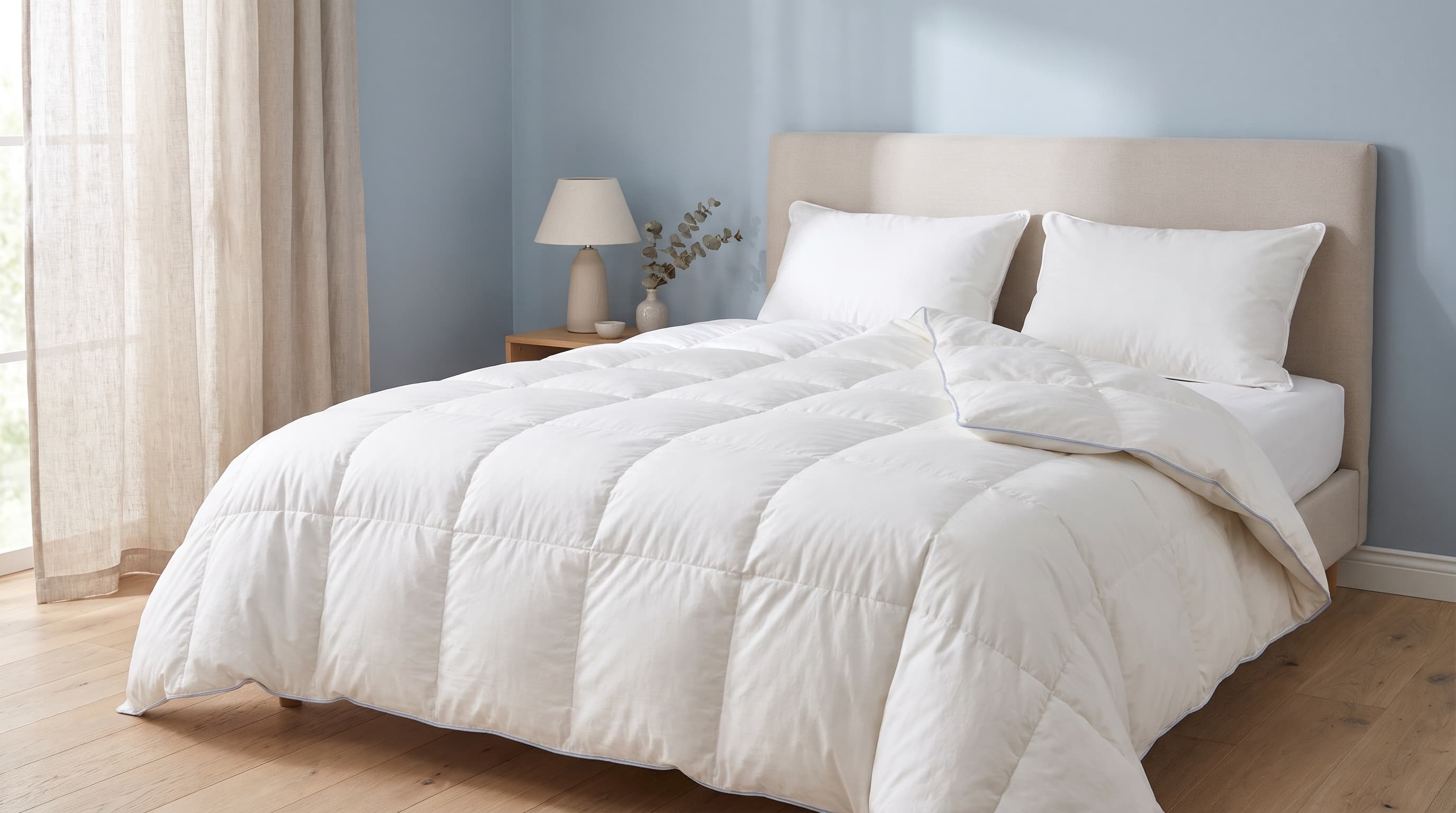
A good anti-allergy duvet doesn't trap the moisture that dust mites thrive on, and it's easy to keep clean. Three things matter most: the filling (alpaca wool, microgel or silicone fibre instead of feathers), 40–50% humidity in the bedroom, and washing your duvet cover and sheets every week at 60°C. The most popular sizes are 160x200, 200x220 and 140x200 cm.
Author: Miya Home team · 8 November 2026
House dust mite allergy is one of the most common allergies, and we get the biggest dose of allergens in bed, where we spend around 7–8 hours a day. A duvet matters, but it isn't a miracle cure – it works best together with a good cover, the right washing routine and dry, cool air in the bedroom. Here's how to put it all together.
What is an anti-allergy duvet?
An anti-allergy duvet (also called a hypoallergenic duvet) is one whose filling and casing limit the growth of dust mites, mould and bacteria, or which doesn't cause allergies itself. In practice it comes down to four features:
A filling without feathers or down, or made of a natural fibre with low allergy potential (e.g. alpaca wool).
Good moisture management – dust mites need moisture, and we release quite a lot of it into the bedding every night.
A tightly woven casing, ideally cotton, which allergens find harder to get through.
Easy hygiene – hot washing (synthetics) or regular airing and cleaning (wool).
Why do dust mites love your bed?
House dust mites are microscopic arachnids that feed on shed skin flakes. They thrive at around 20–25°C and 60–80% humidity – exactly the conditions in warm, slept-in bedding. The allergy is caused mainly by proteins in their droppings, which remain allergenic even after the mites have died.
Typical dust mite allergy symptoms get worse in the morning and during the heating season:
a blocked or runny nose, sneezing,
itchy eyes, nose and throat,
coughing, and shortness of breath in people with asthma,
flare-ups of eczema (atopic dermatitis).
That's why fighting the allergy starts in the bedroom – and in the bedroom, with the bed.
Which duvet filling is best for allergy sufferers?
Filling | For allergy sufferers | Moisture management | Washing | Best for |
|---|---|---|---|---|
Alpaca wool | ✅ very well tolerated, practically lanolin-free | ✅ very good, thermoregulating | ❌ not machine washable – airing, gentle dry cleaning | hot or cold sleepers, lovers of natural materials |
Microgel | ✅ synthetic, no animal allergens | 🟡 good | ✅ as per label | those who like a soft, down-like duvet |
Silicone fibre | ✅ synthetic, no animal allergens | 🟡 good, better with air channels | ✅ as per label | budget choice, easy hygiene |
Down and feathers | ❌ risky with dust mite or feather allergy | 🟡 average | 🟡 difficult | generally not for allergy sufferers |
Sheep's wool | 🟡 depends on processing | ✅ good | ❌ usually not washable | people without a wool sensitivity |
Bottom line: if you prefer natural materials, alpaca wool is the best choice. If frequent machine washing matters most, go for microgel or silicone fibre.
Is an alpaca wool duvet hypoallergenic?
Yes – for most allergy sufferers it's one of the best natural options. Sheep's wool contains lanolin (wool wax), which can irritate some people with sensitive skin. Alpaca fibre contains only trace amounts, so it's well tolerated even by people with allergies and asthma. Lanolin allergy itself is rare – according to a dermatology review it affects about 0.4% of the Western European population.
More important for allergy sufferers is moisture. Alpaca wool absorbs moisture and releases it outwards, so it doesn't get clammy under the duvet – and in a dry environment dust mites find it much harder to multiply.
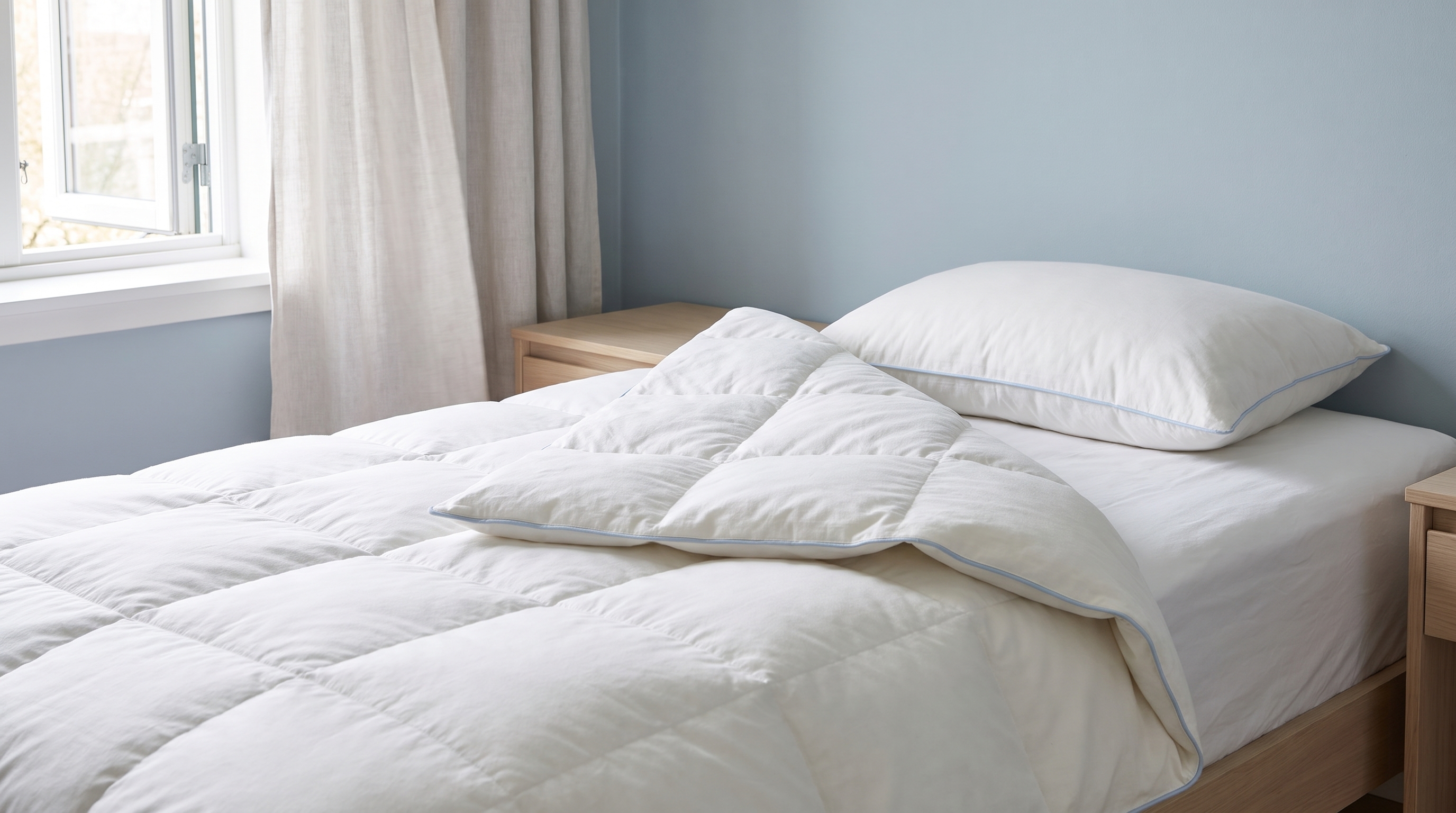
Our alpaca wool duvets are hand-quilted, have a casing of 100% natural, tightly woven cotton and are made to order:
Summer alpaca wool duvet 200 g/m² – light, for summer and very warm bedrooms. From 2,529 PLN.
All-season alpaca wool duvet 400 g/m² – the most versatile, for all year round. From 2,909 PLN.
Winter alpaca wool duvet 600 g/m² – for cold sleepers and chilly bedrooms. From 3,289 PLN.
4 Seasons alpaca wool duvet set 200 + 400 g/m² – two duvets with loops to join them: the summer one in summer, the all-season one in spring and autumn, both together in winter. From 5,275 PLN.
Alpaca duvets come with white or blue piping and are shipped by DPD courier within 14 working days of ordering (delivery within Poland).
Honestly about care: alpaca wool duvets must not be machine washed – the wool will felt. Regular airing outdoors (in winter on a frosty, dry day) and gentle dry cleaning when needed are enough. If you have a severe dust mite allergy, your protection is a tightly woven cover washed weekly at 60°C.
Antibacterial and air-circulation duvets – washable synthetics
If you'd rather have a duvet you can wash at home, we offer two models with synthetic fillings, free of feathers and down:
Antibacterial duvet 155x215 microgel ARTHUR BEIGE – 100% cotton 240 TC casing, 100% microgel fibre filling with SILVERPLUS® technology. Silver nanoparticles inhibit the growth of bacteria and fungi, and the duvet feels as soft as down.
Duvet 155x215 with air circulation Fresh Air – silicone fibre filling with air channels that help the duvet breathe. Good for people who sweat at night.
All-season, summer or winter anti-allergy duvet?
Weight (alpaca) | When | Bedroom temperature |
|---|---|---|
200 g/m² – summer | summer, warm homes | above 22°C |
400 g/m² – all-season | all year, the most popular choice | 18–22°C |
600 g/m² – winter | winter, cold sleepers | below 18°C |
200 + 400 g/m² – 4 seasons | flexible all year round | any |
An all-season anti-allergy duvet is the safest choice for most people. A cooler bedroom (18–20°C) also means worse conditions for dust mites and usually better sleep.
What size anti-allergy duvet should you choose?
Size (cm) | Who it's for | Alpaca duvets | Synthetic |
|---|---|---|---|
140x200 | one person, single bed | ✅ | – |
150x200 | one person, extra width | ✅ | – |
155x215 | one person, taller sleepers | – | ✅ ARTHUR, Fresh Air |
160x200 | one person with room to spare or a couple on a small double | ✅ | – |
180x200 / 200x200 | couple, double bed | ✅ | – |
200x220 | couple, double or king bed | nearest sizes 220x200 and 240x220 | – |
240x220 | couple, king or super king bed | ✅ | – |
Tip: 160x200 is the most common choice for one person. Couples often go for 200x220, but if one of you runs cold and the other hot, two separate 140x200 or 160x200 duvets work better. Remember to choose bedding in the same size as your duvet.
Which anti-allergy duvet for children?
Dust mite allergy most often appears in childhood. A children's anti-allergy duvet should:
be light and not cause overheating – children sweat more than adults,
have a cotton casing that's gentle on sensitive skin,
be easy to clean – children eat, play and get ill in bed.
For an older child, a summer or all-season alpaca wool duvet in 140x200 works well. If machine washing matters to you, choose a synthetic one. For a child with asthma or eczema, it's best to discuss bedding with an allergist.
How to care for your duvet and bedding with a dust mite allergy
An anti-allergy duvet alone won't help if your bedroom is a paradise for dust mites. The key rules:
Wash covers and sheets every week at 60°C. Dust mites die at this temperature, so choose cotton bedding that can take it.
Keep humidity at 40–50%. Buy a hygrometer and don't overdo the humidifier in winter.
Sleep cool – 18–20°C.
Air your bedding every morning. Don't make the bed straight away – fold the duvet back for 20–30 minutes.
Wash synthetic duvets every few months as per the label; air wool duvets outdoors regularly.
Cut down on dust traps in the bedroom – rugs, heavy curtains, soft toys on the bed.
Vacuum with a HEPA filter, ideally when the allergy sufferer is out of the room.
Anti-allergy bedding and pillows – completing the set
The duvet is half the story. Just as important are:
Anti-allergy bedding – tightly woven cotton that can be washed at 60°C. See our Egyptian cotton bedding: satin-smooth, breathable and gentle on sensitive skin.
An anti-allergy pillow – your face, nose and eyes rest on it all night. Our alpaca wool pillow comes in three heights: low (for front sleepers), medium (back sleepers) and high (side sleepers), in 50x60, 50x70 and 70x80 cm, from 827 PLN. Your head won't sweat, and alpaca wool is practically lanolin-free.
Read more about alpaca wool in our article Alpaca duvet and alpaca pillow – properties and sizes. Browse all models in Duvets and Pillows.
A good anti-allergy duvet – checklist before you buy
☐ Feather-free filling: alpaca, microgel or silicone
☐ Tightly woven cotton casing
☐ Weight matched to your bedroom temperature
☐ Size that fits your bed and bedding
☐ You know how to clean it (machine wash or airing)
☐ Bedding you can wash at 60°C
Sources
This article is for information only and does not replace advice from an allergist.