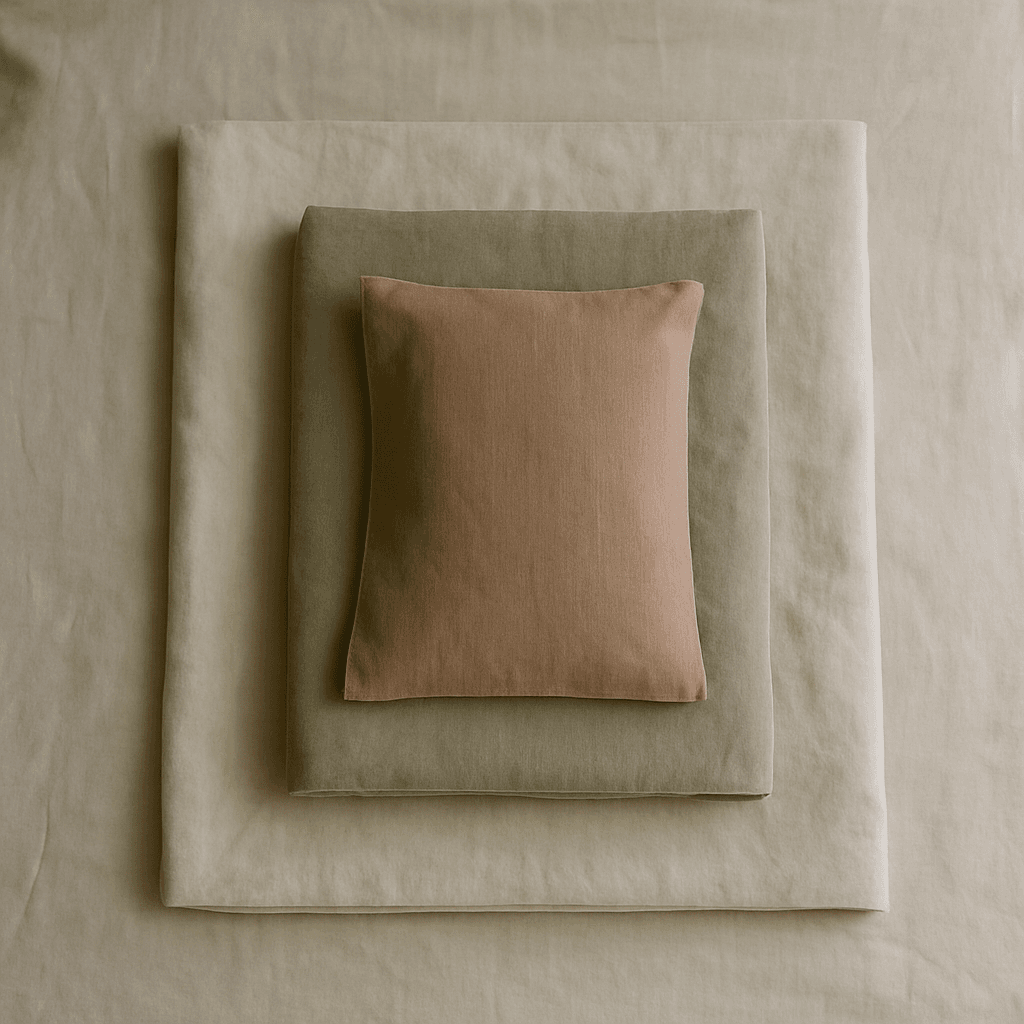

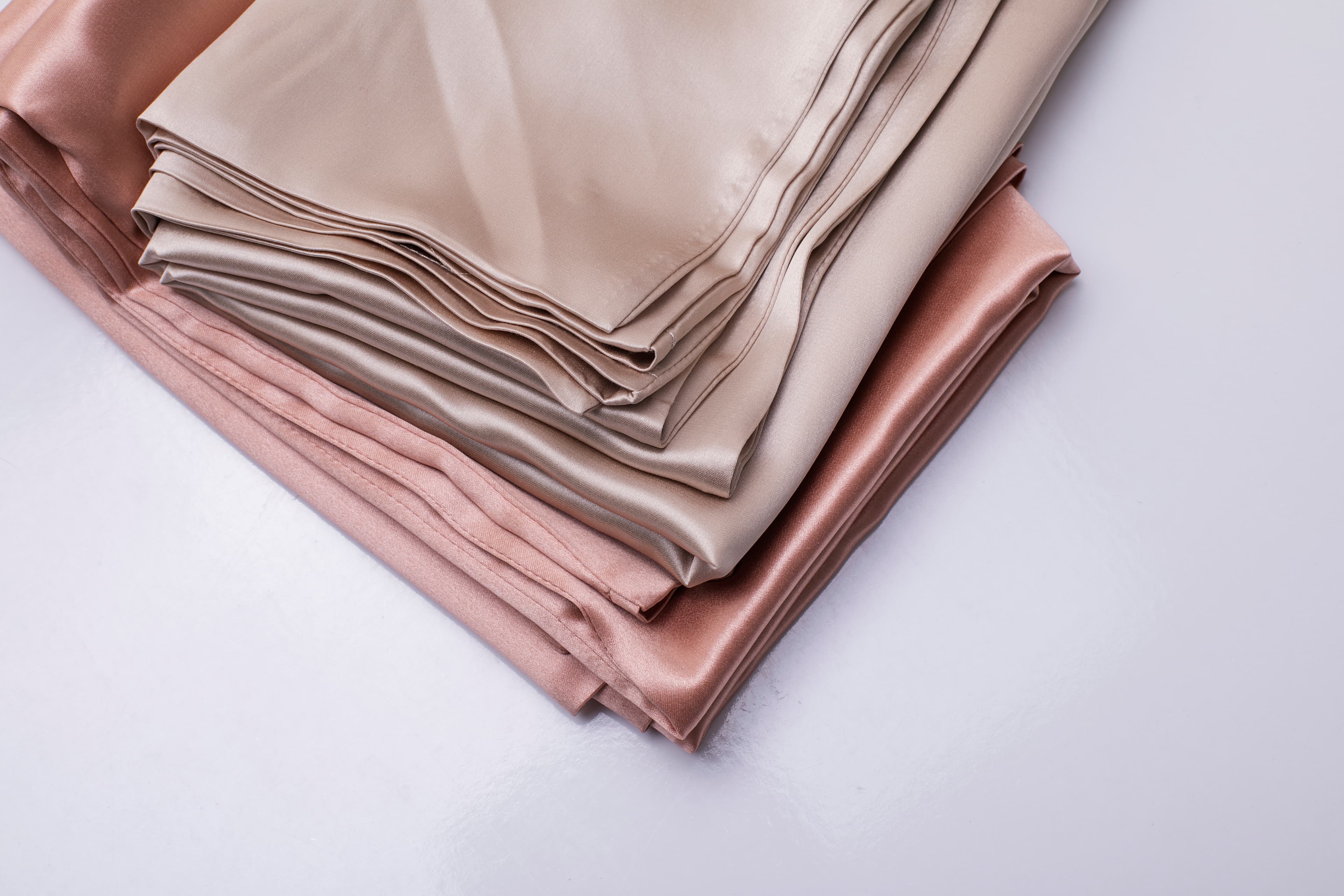
Let’s start with the most important question: is satin polyester? The simple answer is: no. Satin is a weaving technique, not a specific material. While satin can be made from polyester, silk, cotton or viscose, the word itself doesn’t mean polyester.
|
What is satin, really?
Satin is a weaving technique, not a specific type of material. It’s often mistaken for a type of fabric, but satin is actually a way of interlacing threads that gives fabric its signature sheen and smooth texture.
What makes a satin weave different?
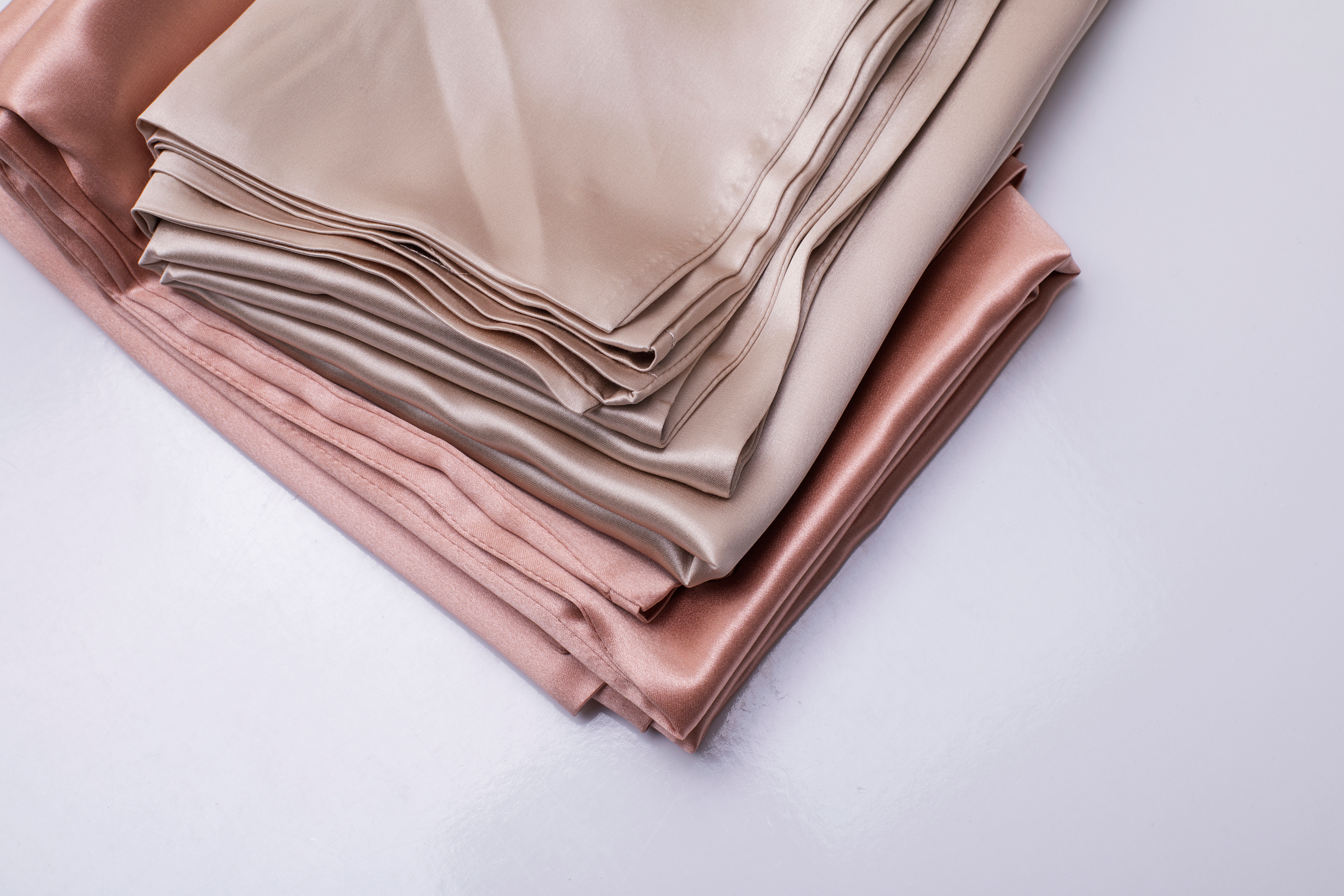
The satin weave is based on a pattern where one thread (e.g. the warp) floats freely over several weft threads before passing under just one. The most common arrangement is 4-over-1 or more, which minimises the number of points where threads cross. This is what gives the fabric’s face a smooth, glossy, elegant look, while the reverse side stays matte and softer to the touch.
Where does satin come from?
Satin originally started out as a silk fabric. Silk satin weaves were prized in China centuries ago, and the technique later travelled to Europe along the Silk Road. In medieval times, satin was a symbol of luxury, available only to the wealthiest.
What can satin be made from?
Satin can be woven from a variety of fibres, such as:
silk
cotton (often called “cotton satin”)
polyester or nylon – creating a more affordable alternative to natural fibres.
Cotton satin is woven purely from cotton fibres, while polyester satin is a synthetic fabric with the very same weave. Despite the identical weaving method, the differences in everyday use are significant.
Why does satin have a sheen?
The minimal number of thread crossing points means light bounces off the surface with almost no scattering. Long “floats” (yarns that lie freely on the surface) create that mirror-like shine. This is exactly why satin looks more luxurious than plain cotton or a basic weave.
Where is satin used?
Thanks to its elegant look and softness, satin frequently turns up:
in bedding and lingerie (especially cotton or polyester satin)
in elegant clothing — evening dresses, blouses, scarves
as a finishing material in interiors — curtains, upholstery, linings.

What is polyester?
Polyester is one of the most widely used materials in the textile industry. It’s a synthetic man-made fibre derived from crude oil, usually made from terephthalic acid and ethylene glycol. Although it isn’t natural, its popularity keeps growing thanks to its low cost, durability and ease of production.
How is polyester made?
Making polyester involves transforming chemical components into long polymer chains. The resulting fibres are then spun into yarn, which is woven into all kinds of fabrics – including satin. Polyester can be used on its own or blended with other fabrics, such as cotton or viscose, to improve their performance.
Key properties of polyester
Durability – polyester fibres resist stretching, abrasion and creasing, so polyester fabrics keep their shape and look for a long time.
Moisture resistance – unlike natural fibres, polyester doesn’t absorb water, so it dries much faster.
Easy care – polyester clothing and bedding can go straight in the washing machine, don’t need ironing, and won’t shrink.
Low breathability – this is one of its main drawbacks. Polyester doesn’t “breathe” well, which can cause excess sweating and discomfort while sleeping or wearing it.
Sensitivity to heat – the material can melt at very high temperatures, so care is needed when ironing or drying it.
Is polyester safe?
Many people avoid polyester, seeing it as “artificial” and unhealthy. It’s true that it’s a synthetic material, but when manufactured to strict standards, it can be perfectly safe for the skin. Certified polyester fabrics exist, such as those bearing the OEKO-TEX® label, which don’t contain harmful chemical substances.
Where is polyester used?
Today, polyester is everywhere:
in sportswear and everyday clothing (e.g. hoodies, jackets, thermal underwear)
in bedding, curtains, furniture upholstery
in accessories such as bags, backpacks, decorative cushions
Is satin polyester? – The answer, step by step
Many people ask themselves this question when buying bedding, clothes or home accessories: is satin polyester? To answer precisely, you need to separate two concepts: weave and raw material.
Satin refers to a type of weave – the way threads are interlaced in a fabric. It’s characterised by a smooth, glossy surface on one side and a matte one on the other. It’s this weave that’s responsible for the material’s sheen and softness, the qualities we associate with elegance and luxury.
Polyester, on the other hand, is a type of fibre that fabric can be made from – just like cotton, silk or viscose. This means satin can be made from various raw materials: natural (e.g. cotton, silk) or synthetic (mainly polyester).
In practice, when a product label says “satin”, it often means polyester satin, since it’s cheaper to produce and easier to maintain. That’s why many people mistakenly equate satin with polyester.
There are also cases where sellers deliberately avoid specifying the material’s composition, relying on satin’s positive associations to sell a product made of cheap polyester. That’s why it pays to read the label and pay attention not just to the word “satin”, but to the actual composition too.
To answer step by step: satin is a weave, polyester is a fibre – they can appear together, but they aren’t the same thing. Not every satin is polyester, but a lot of the satin on the market today really is made from it.
Comparison: polyester satin vs. cotton satin
Although both are called “satin”, they differ from each other in many respects. One is made from man-made fibres (polyester), the other from natural ones (cotton). Below you’ll find the key differences between polyester satin and cotton satin that are worth knowing before buying bedding or clothing.
1. Material composition
Polyester satin is made from synthetic fibres – a plastic-based material derived from crude oil.
Cotton satin is a fabric made of natural cotton, woven in a satin weave – which makes it smooth and lightly glossy, while still being breathable and natural.
2. Look and sheen
Both versions have a characteristic sheen, however:
Polyester often has a more intense, “artificial” shine reminiscent of silk, but it can look cheap.
Cotton satin gives a softer, more elegant sheen and looks more natural.
3. Breathability and comfort
Cotton satin outperforms polyester when it comes to breathability. It wicks moisture well, doesn’t overheat the body, and works well all year round.
Polyester has low air permeability. It can cause sweating, especially in summer.
4. Durability and care
Polyester is highly resistant to creasing and wear, easy to wash, and doesn’t need ironing.
Cotton is also durable, but it can wrinkle and may need ironing. It handles high-temperature washing well, which is an advantage for allergy sufferers.
5. Price
Polyester satin is significantly cheaper. That’s the main reason for its popularity.
Cotton satin costs more, since it’s based on a natural raw material and is often higher quality.
6. Impact on health and the environment
Cotton is biodegradable, hypoallergenic and safe for the skin – especially for children and allergy sufferers.
Polyester can cause discomfort and doesn’t biodegrade, which places a burden on the environment.
FAQ – frequently asked questions
1. Is satin polyester?
No. Satin is a fabric weave – a way of interlacing threads, not a material. It can be made from different fibres – e.g. cotton, silk, polyester or viscose. However, the satin you’ll find in shops is very often polyester, which is why the two terms get mixed up. It’s always worth checking the composition on the label or in the product description.
2. Does cotton satin feel scratchy or stiff?
No. Cotton satin is very smooth, soft and pleasant to the touch. Thanks to the satin weave, it has a gentle sheen while still retaining the properties of natural cotton – it’s breathable, flexible and won’t irritate the skin. It works well even for children and allergy sufferers.
3. Does polyester satin breathe?
Unfortunately, no. As a synthetic fibre, polyester has low air permeability, which can trap heat and moisture against the skin. This means polyester satin can cause discomfort – especially on warm nights or with extended use. For that reason, it’s not recommended for people with sensitive skin or a tendency to overheat.
4. Does cotton satin wrinkle?
Less than plain cotton, but yes – it can wrinkle slightly, since it contains no synthetic additives. That said, it’s a fabric that irons easily and holds its shape for a long time. Cotton satin bedding still looks great even after several washes.
5. Is cotton satin good for both winter and summer?
Yes. It’s a very versatile fabric. In summer it stays breathable and cool to the touch, while in winter it insulates heat well while remaining breathable. That makes it ideal as year-round bedding – especially for people who value natural materials and sleep comfort.