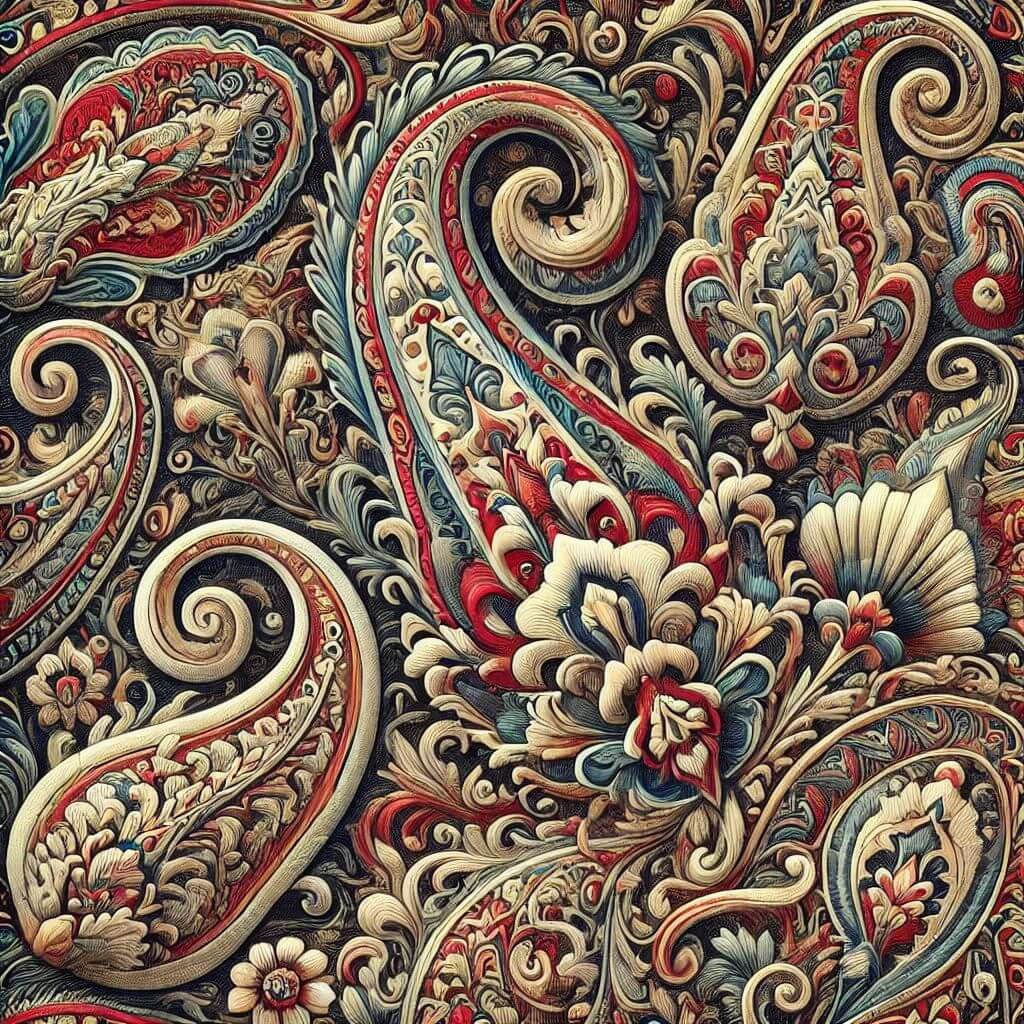

The paisley pattern, known in Poland as the "Turkish cucumber", is one of the most characteristic and recognisable ethnic patterns in the world. Its history reaches back hundreds of years, and its unique curved shape has inspired artists and craftspeople across many cultures. In this article we look at the history of the pattern, its origin and its modern uses, with particular attention to bedding textiles. Along the way we also consider how paisley relates to other ornaments such as the arabesque, damask and Turkish patterns.
Guide:
History and origin of the paisley pattern
The name "Paisley"
The paisley pattern in Turkish culture
Ethnic pattern and ornament
Modern uses of the paisley pattern
Paisley patterns in bedding
Paisley and modern design
Summary
History and origin of the paisley pattern
The paisley pattern, known for its characteristic curved shapes resembling a teardrop or a leaf, has its roots in ancient Persia (today's Iran). The first mentions of similar ornaments can be found in Sasanian art, which flourished in the region from the 3rd to the 7th century AD. In those times the pattern symbolised life and eternity, and its organic shape was often associated with the date palm, a symbol of fertility in that culture.
Later the pattern reached India, where it gained popularity among local artists, especially in the region of Kashmir, known for producing luxurious shawls. Kashmir shawls with this pattern became an export good that quickly won popularity in Europe. In the 18th and 19th centuries the British, particularly those who travelled to India with the East India Company, brought shawls with the paisley pattern to England, where they became enormously popular among the aristocracy.
The name "Paisley"
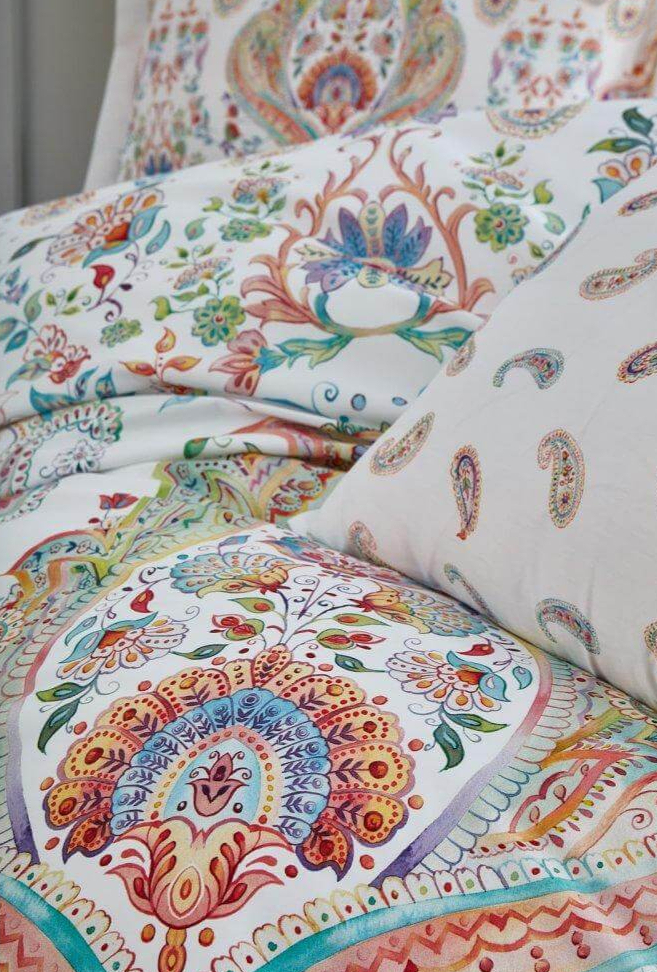
Although the paisley pattern has its roots in Persia and India, its name comes from the Scottish town of Paisley, which in the 19th century became a centre for producing shawls with this pattern. The town, an important centre of the textile industry, began producing local versions of Kashmir shawls in imitation of the oriental pattern. From then on, the curved ornament became widely known as the "paisley pattern".
The paisley pattern in Turkish culture
In Turkey the paisley pattern, sometimes called the "Turkish cucumber" because of its cucumber-like shape, also grew popular. Turkish ornamental patterns such as the arabesque and other geometric forms often combined with paisley, creating complex, decorative compositions used across art and craft, from fabrics to ceramics.
Turkish patterns, like paisley, often carried symbolic meaning. In Islam, because of the prohibition on depicting human figures, decorative art relied mainly on geometric and plant patterns and on arabesques. The paisley pattern fitted these aesthetic principles perfectly, which made it an integral element of ornamental art in the region.
Ethnic pattern and ornament
Paisley is an example of an ethnic pattern that, though rooted in a specific culture, has become a global symbol. Ethnic patterns such as paisley play a key role in preserving and passing on cultural traditions through art and craft. Paisley, like the arabesque and damask, is an example of an ornament that carries the aesthetic and symbolic values of different cultures.
The arabesque, also a frequent motif in Islamic art, consists of repeated, symmetrical plant and geometric patterns. Damask, originating in Damascus, is an elegant fabric pattern that often combines plant and geometric motifs in complex compositions. The paisley pattern, with its organic form, harmonises perfectly with these ornaments, which is why they are often used together in textile designs.
Modern uses of the paisley pattern
Today the paisley pattern is everywhere in fashion and design. Though its beginnings are connected with luxury fabrics such as Kashmir shawls, it can now be found on all kinds of textiles, bedding included. Contemporary designs often refer to the pattern's ethnic roots while introducing modern interpretations, combining it with other patterns, colours and materials.
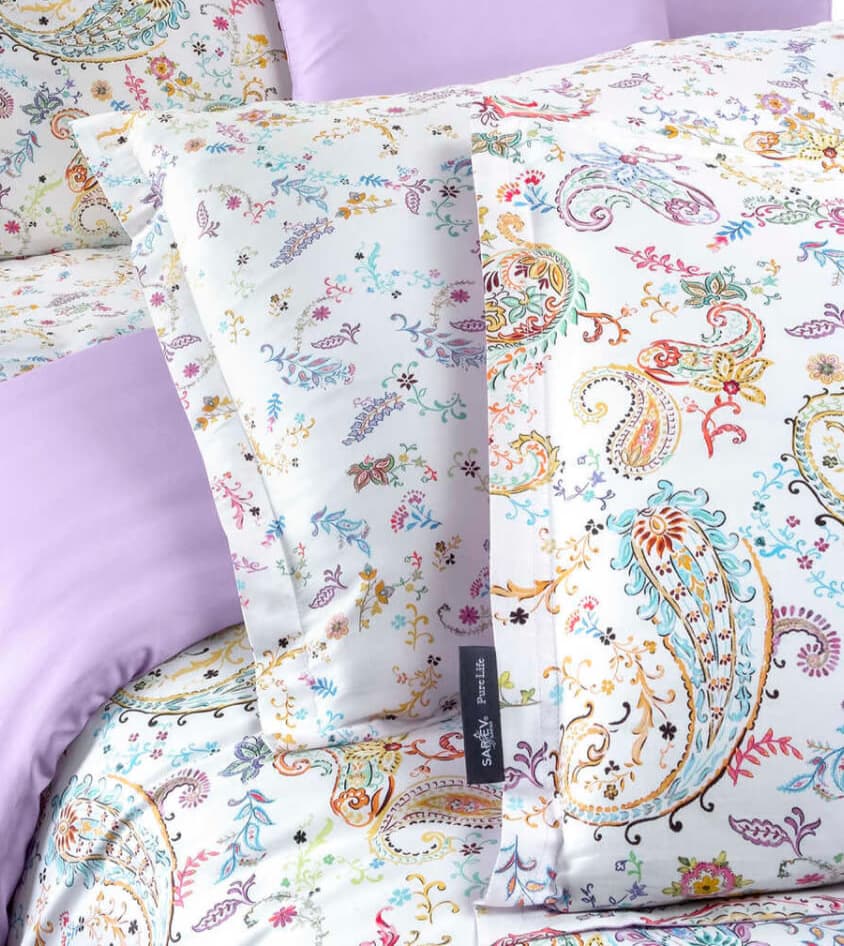
In bedding, the paisley pattern is particularly popular because it adds elegance and an exotic character to a room. Contemporary bedding sets with paisley often use delicate pastel colours, but bolder versions with intense shades are also available, bringing dynamic energy into the bedroom.
Paisley patterns in bedding
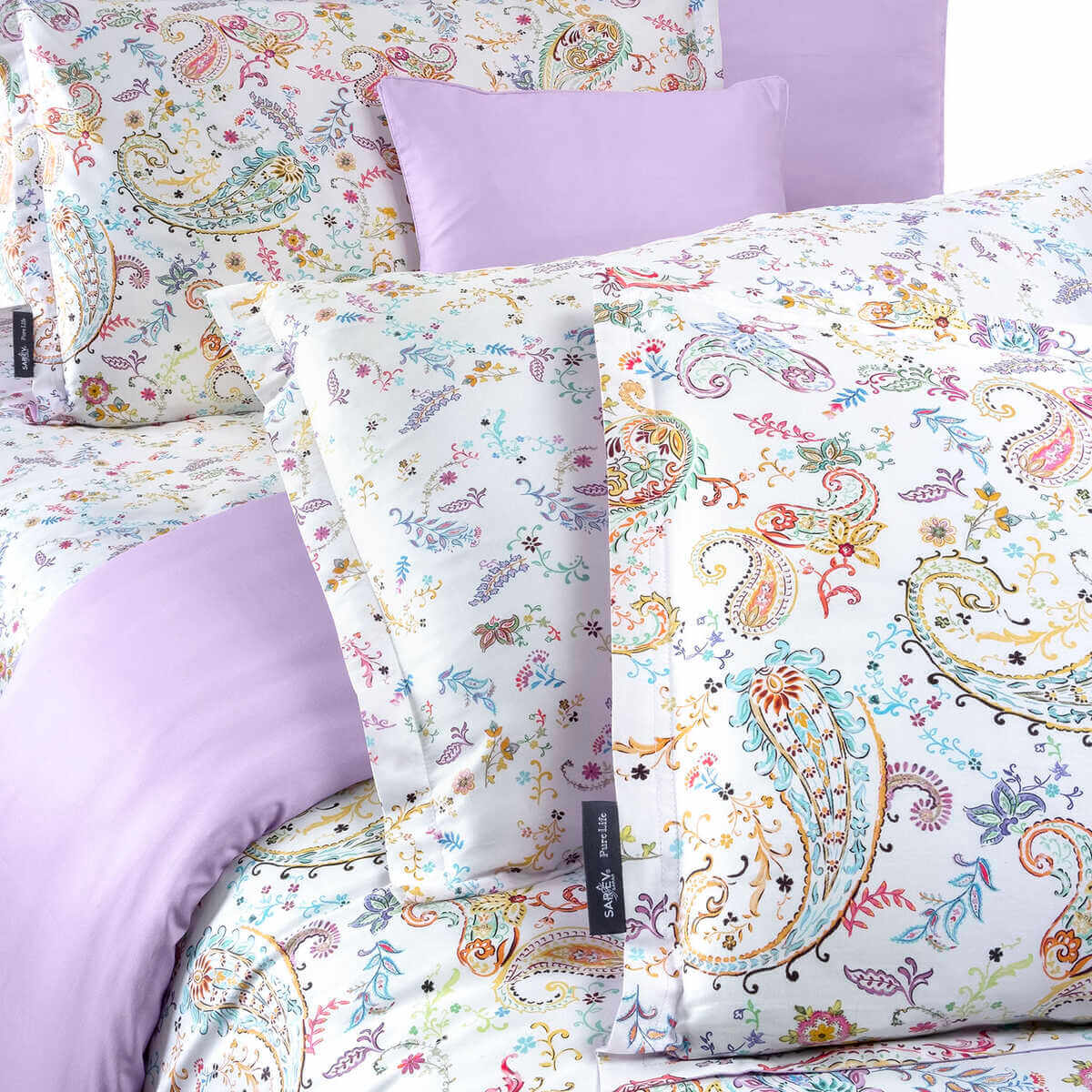
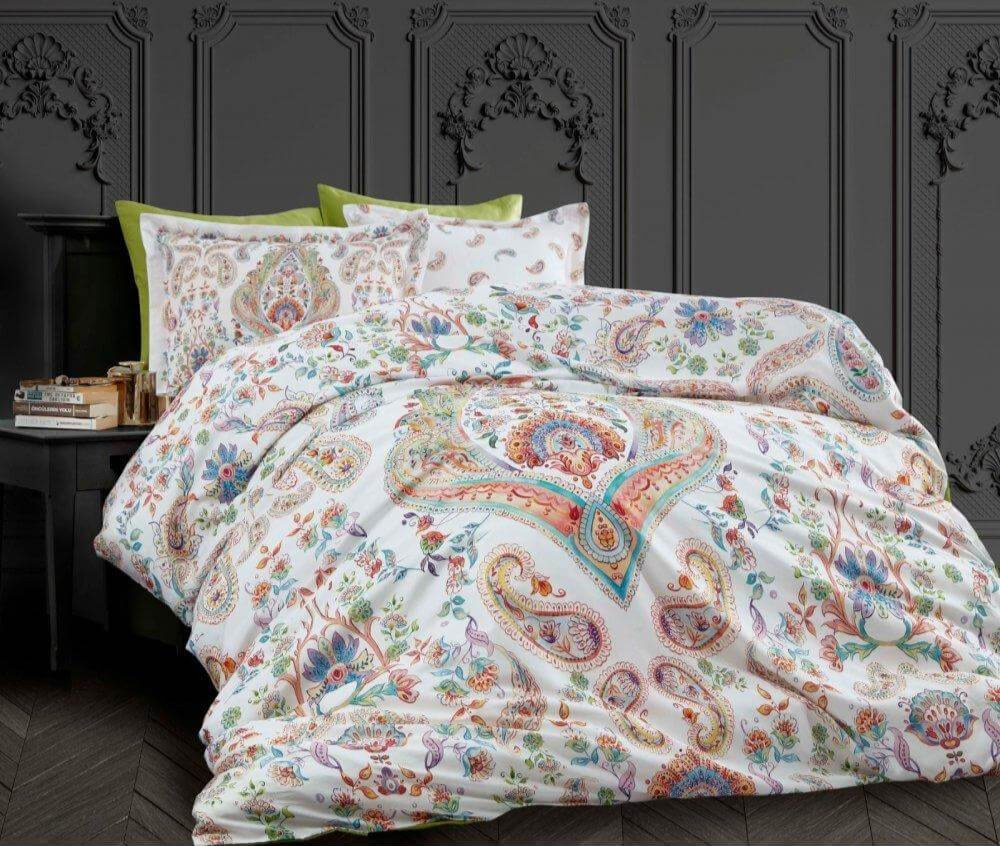
Paisley is a pattern that works superbly in bedding textiles, in classic and modern interiors alike. Its curved, organic shapes create an impression of movement and harmony, which makes it ideal for the bedroom.
Paisley patterns in bedding can be found in various versions – from subtle, monochrome interpretations to more complex, multicoloured compositions.
One of the reasons paisley is so popular in bedding is its versatility. It can be used in elegant, classic interiors, but works just as well in more boho or ethnic arrangements. Depending on the colours and style, paisley can give a room a refined character or a relaxed, artistic atmosphere.
More examples of bedding with the paisley pattern.
Paisley and modern design
Although the paisley pattern comes from older cultures, contemporary designers reach for it readily, joining tradition with modernity. Modern interpretations of paisley often place it in minimalist, contemporary contexts, where it is used in simpler, more graphic forms. In bedding you can find both classic and modern versions of the pattern, which means it suits a range of interior styles.
Alongside traditional interpretations, bedding fabric designers are also introducing new printing techniques that give paisley a fresh feel. Modern materials such as microfibre or cotton with a silk component allow high-quality patterns that are not only beautiful but durable and comfortable in use.
Summary
The paisley pattern, though rooted in ancient Persia, has stood the test of time and become one of the most universal and ubiquitous ethnic patterns in the world of fashion and design. Its curved, organic shapes, inspired by nature, have won international popularity, and its contemporary uses in textiles, bedding included, keep it current and fashionable.
Patterns such as the arabesque, damask and Turkish ornaments have also enriched the aesthetics of paisley, giving it new meanings and contexts in different cultures.
Thanks to its symbolism and aesthetic versatility, the paisley pattern still delights and inspires designers and design lovers around the world. Its exceptional ability to adapt allows it to be used in classic and contemporary interiors alike. From luxury fabrics to practical decorative elements, paisley remains one of the most timeless ornamental motifs, bringing subtle elegance and a rich cultural heritage into a space.
Whatever its use, the paisley pattern has always symbolised a wealth of tradition and an eye for beauty, and its unique combination of history and modernity makes it an irreplaceable decorative element in textiles, including bedding, clothing and interior accessories.