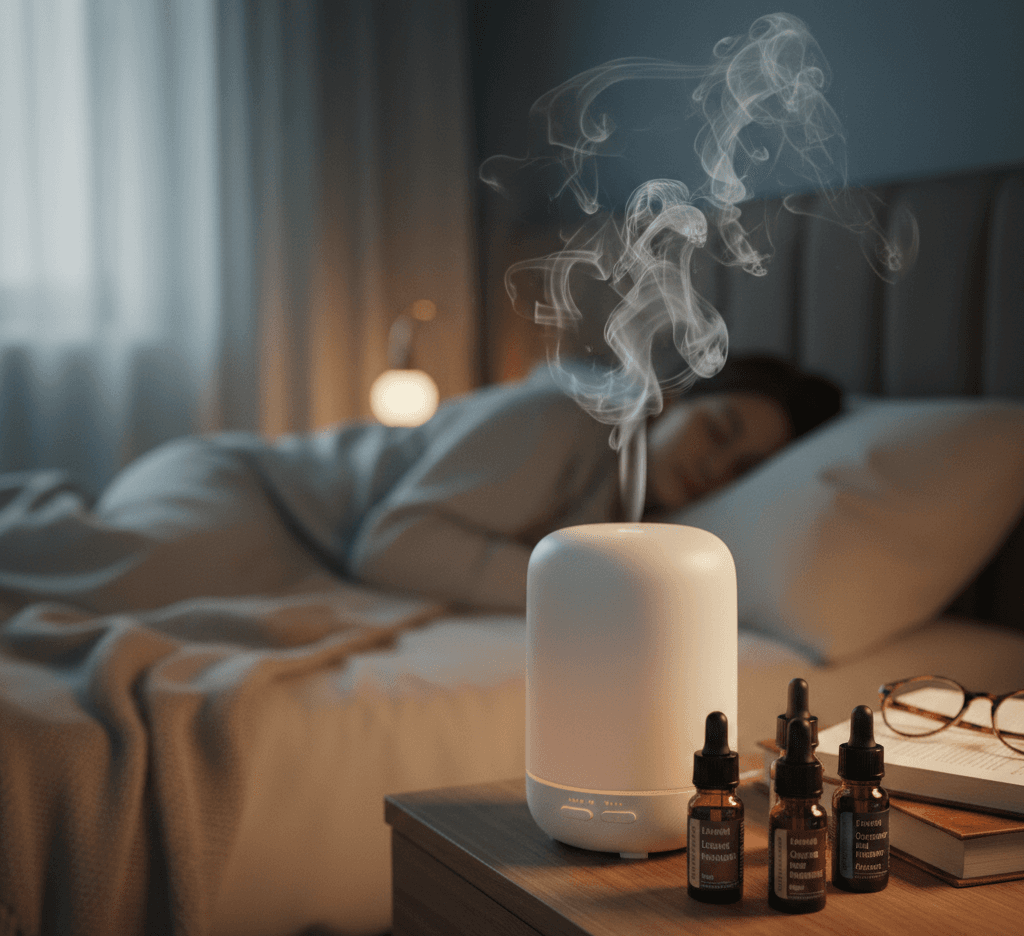

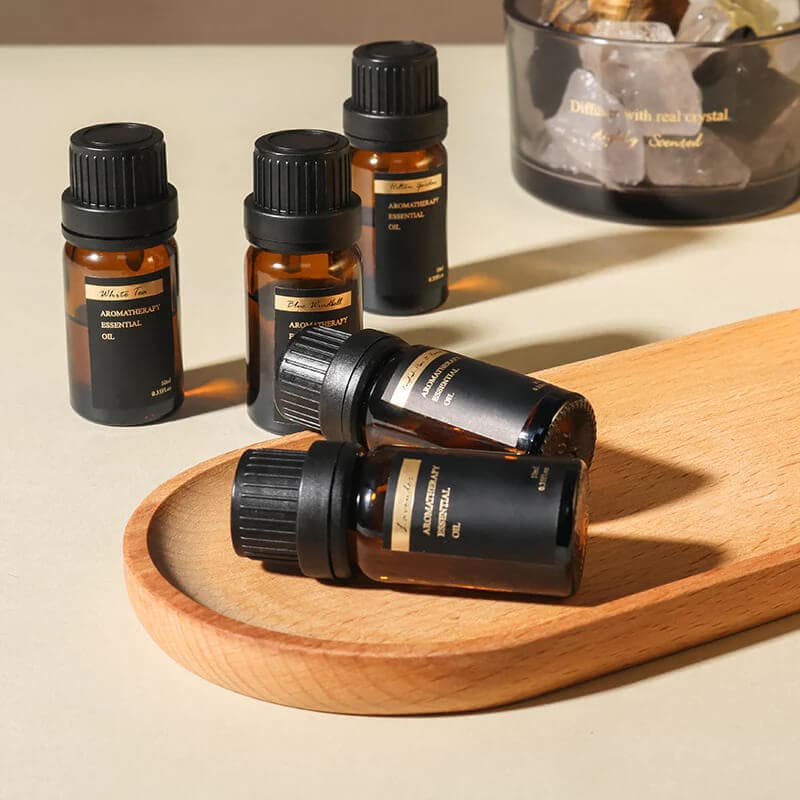
Have you ever wondered what's really behind those little bottles that fill our homes with the scent of forest, lavender, or warm vanilla cake? Essential oils and fragrance oils differ significantly in both composition and purpose, even though they share one main goal – filling a space with a beautiful aroma. Choosing between them isn't always simple, but understanding the key differences helps you pick the right product for your needs. Let's look at five main differences and discover how synthetic fragrances can pleasantly surprise you too.
Guide:
Origin and production method: essential oils vs. fragrance oils Chemical composition and effects Longevity and intensity of the scent Price and availability Uses – from home rituals to spa relaxation Stone fragrance diffusers – an elegant way to a long-lasting scent Summary |
1. Origin and production: essential oils vs. fragrance oils
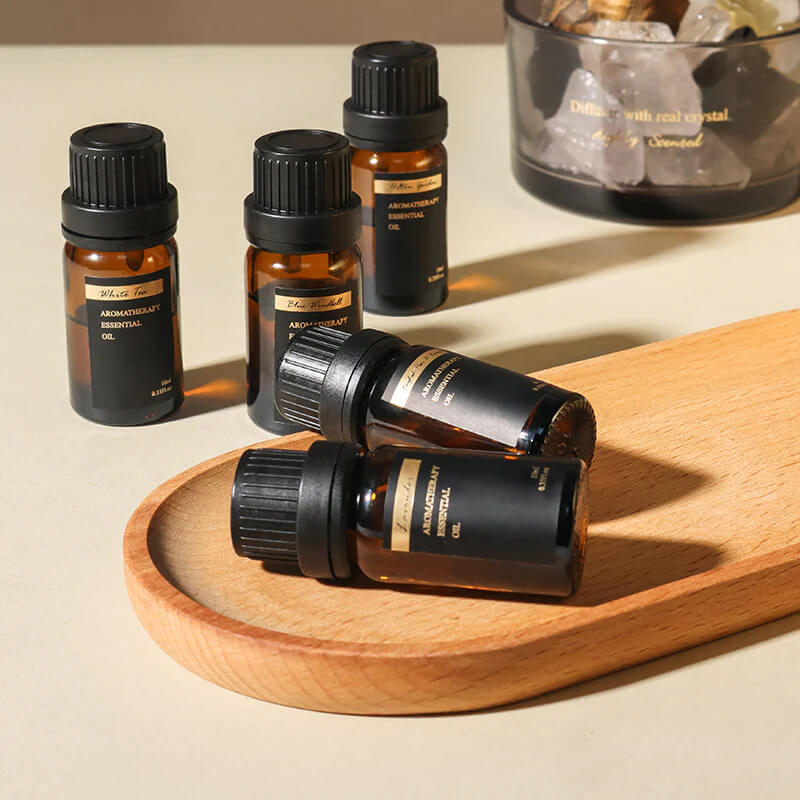
Essential oils are true gifts of nature. They're produced by gently distilling or pressing plants – flowers, leaves, bark, or fruit – which lets them retain their natural properties and authentic scent. Lavender oil, for example, is extracted from lavender flowers, giving it a fresh, relaxing, delicate yet remarkably intense fragrance. Tea tree oil, on the other hand, is prized for its antibacterial and purifying properties.
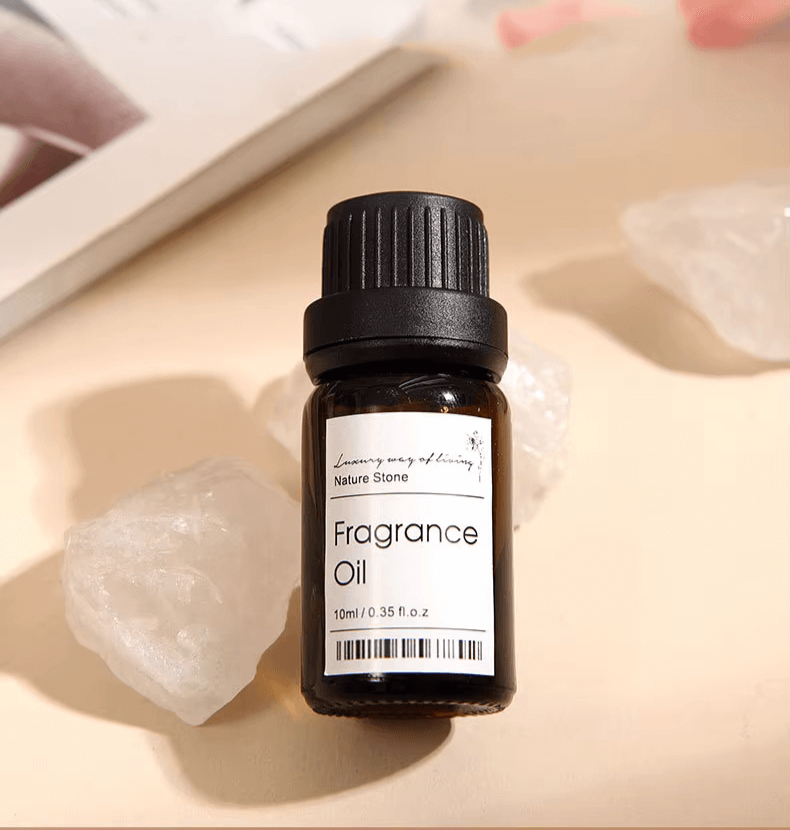
Fragrance oils, on the other hand, are creations composed artificially in laboratories. Although they can be a blend of natural and synthetic ingredients, their scent is the result of the work of chemists and perfumers. That's what makes it possible to recreate aromas that are almost impossible to find in nature – like freshly baked cinnamon cake, coffee with a hint of vanilla, or even modern perfumes with notes of musk and exotic fruit! Despite being synthetic, these scents add coziness and character to a space, without you having to light a candle or bake a cake.
2. Chemical composition and effects
Essential oils are complex blends of many natural chemical compounds, which give them health-supporting properties beyond just fragrance. Eucalyptus oil, for instance, has a soothing effect on the respiratory tract, while peppermint oil can help ease headaches. They're widely used in aromatherapy, a practice growing ever more popular for its health benefits.
Fragrance oils, while they may lack therapeutic properties, are excellent at evoking positive emotions and memories. The scent of coconut or watermelon can transport your thoughts to an exotic holiday, while baked apple with cinnamon can bring back memories of family gatherings and festive warmth. These scents are made possible by synthetic fragrance compounds, which allow for enormous variety and intensity of aroma.
3. Longevity and intensity of scent
Fragrance oils are usually longer-lasting than essential oils, which is a major advantage when you want an aroma to stick around. Synthetic ingredients let the scent linger in the air longer, so a whole room can carry one distinct fragrance for hours on end. Vanilla and amber are perfect examples – soft and pleasant, yet remarkably long-lasting.
Essential oils, on the other hand, are more volatile but offer a different kind of intensity. Their scent often evolves as it disperses, giving it a certain dynamism and depth. Rose oil, for example, opens with an intense floral note that gradually fades, leaving behind a subtle, fresh accent in the room.
4. Price and availability
Because of the demanding extraction process and the sheer amount of raw material needed – it can take up to a kilogram of rose petals for a single bottle of rose oil! – essential oils tend to be pricier than fragrance oils. Fragrance oils, thanks to their synthetic production, are far more accessible and affordable, letting you enjoy a wide range of scents in your everyday surroundings without breaking the bank.
5. Uses – from home rituals to spa relaxation
Essential oils are used in aromatherapy, massage, and bathing rituals. Add lavender oil to a relaxing bath, or diffuse lemon oil into the air for a refreshing, focus-boosting effect.
Fragrance oils, meanwhile, are perfect for decorative, everyday scenting rituals at home. They work beautifully in all kinds of diffusers, candles, wax burners, and stone diffusers like the ones we offer in our shop. With such a wide range of scents on hand – from fresh citrus notes to sweet, cozy blends and rich perfume-like compositions – you can effortlessly transform the mood of any room.
Stone fragrance diffusers – an elegant way to a long-lasting scent
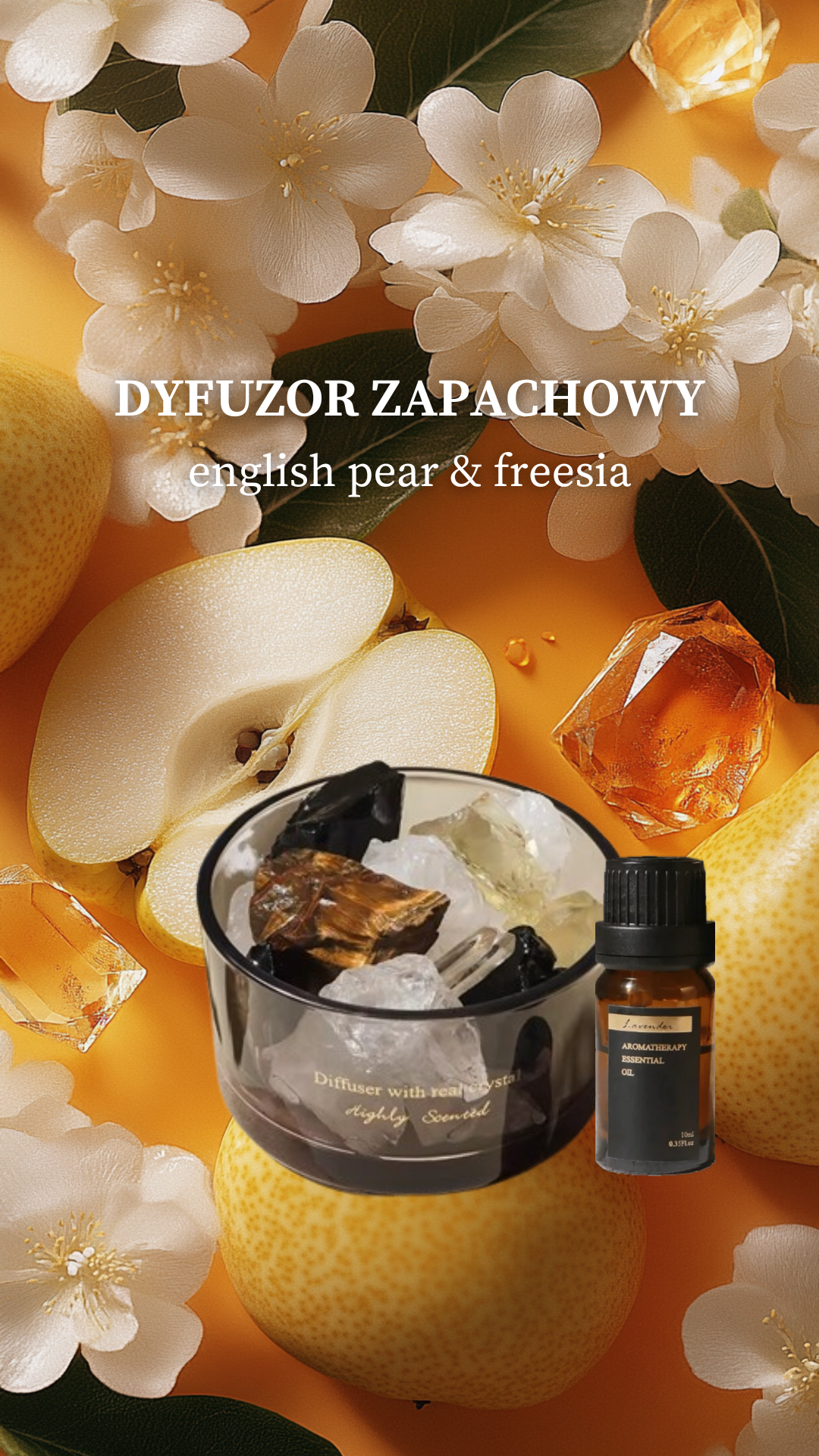
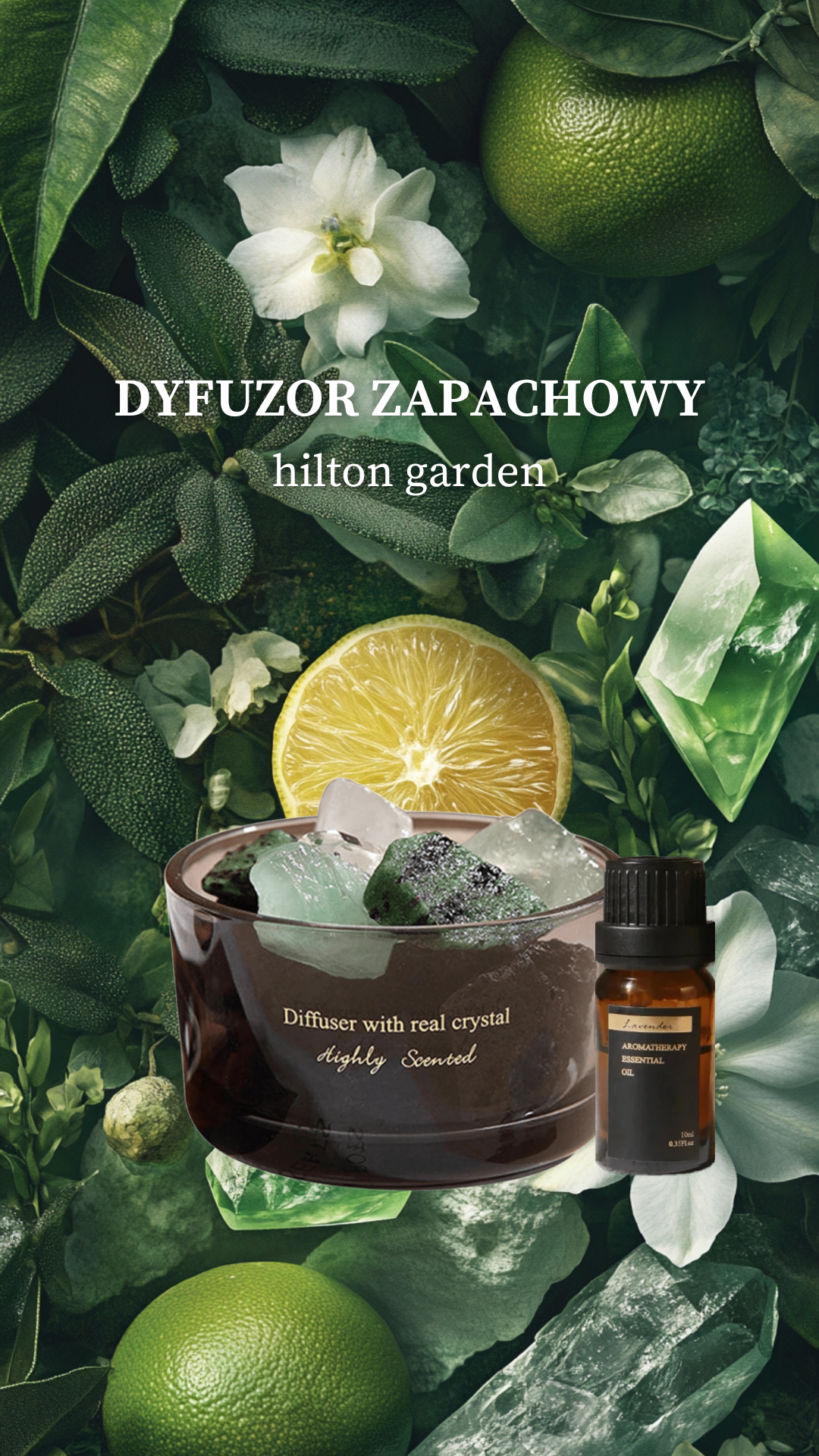
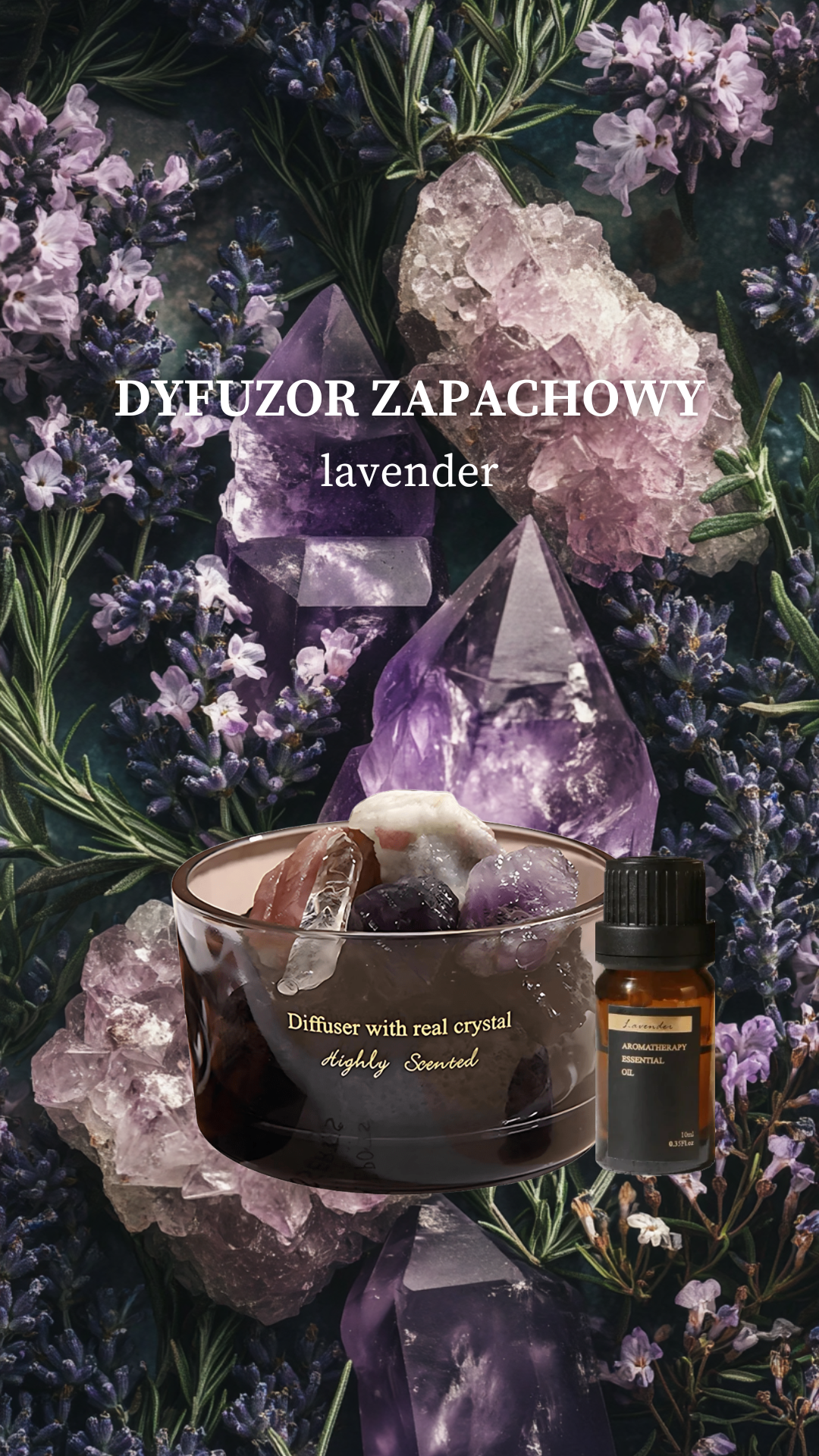
Our range includes stone fragrance diffusers that pair perfectly with fragrance oils. Thanks to their porous, uneven surface, the stones absorb oil beautifully and release its aroma gradually, giving you a long-lasting effect. Just a few drops of your chosen oil on the stone's surface is enough to enjoy a subtle yet lasting scent throughout the room. It's an eco-friendly, stylish solution that fits perfectly with today's decor trends, while offering a wide range of scents to choose from.
The stones available in our shop, paired with your chosen fragrance oils, are a perfect way to create a unique atmosphere. Pick a scent that best captures the mood of your space – from sunny citrus, to floral jasmine, to the calming aroma of sandalwood. Our stones aren't just beautiful, they're also highly practical, since they need no electricity or flame, making them a safe and energy-saving way to bring fragrance into your home.
Summary
Both essential oils and fragrance oils have their own unique strengths. Natural essential oils are more than just a scent – they offer therapeutic benefits that can't be fully replicated. Fragrance oils, meanwhile, offer incredible variety, letting you experiment freely with aromas and match them to any occasion or mood. The stone fragrance diffusers in our range release scent gradually, in a way that's both subtle and striking.
Whether you're drawn to natural, essential aromas or you prefer the intensity and variety of fragrance oils, you're sure to find something that highlights the unique character of your home.