
Why do we need to sleep? Sleep isn't just downtime — it's a complex biological process that's essential for our health and wellbeing. From an evolutionary standpoint, sleep has always served vital functions, helping species survive. At night, while our bodies rest, the brain gets to work on recovery, processing information, and preparing us for the challenges of the day ahead. Without enough sleep, our bodies become vulnerable to a wide range of ailments, from a weakened immune system to heart problems.

Guide
Why is sleep so important?
How much sleep do we need?
Signs you're not getting enough sleep
Sleep calculator
Sleep stages
NREM sleep
REM sleep
Tips for better sleep
What should I do if I have trouble sleeping?
How to fall asleep in 5 minutes
Why is sleep so important?
Sleep is essential for the proper functioning of many life processes:
Physical recovery: While we sleep, our body rebuilds cells and tissue. Growth hormones, which are active at night, speed up the repair of muscles, bones, and other tissues. This is especially important for physically active people, who need time to recover after intense exercise.
Cognitive function: Sleep plays a key role in memory consolidation. Studies show that REM sleep, which occurs mostly in the second half of the night, is particularly important for emotional processing and creative thinking. Without enough sleep, our ability to absorb new information and think creatively can drop significantly.
Hormone regulation: Sleep affects hormonal balance. Sleep deprivation can raise levels of cortisol (the stress hormone) and insulin, which can contribute to weight gain and metabolic problems.
Mental health: Not getting enough sleep can lead to mood problems such as anxiety, depression, and irritability. It's worth noting that the relationship runs both ways — sleep problems can worsen mental health, while poor mental wellbeing can make it harder to fall asleep.
How much sleep do we need?
The amount of sleep we need changes as we age. Here are the general guidelines:
Newborns (0-3 months): 14-17 hours a day
Infants (4-11 months): 12-15 hours
Toddlers (1-2 years): 11-14 hours
Preschoolers (3-5 years): 10-13 hours
School-age children (6-13 years): 9-11 hours
Teenagers (14-17 years): 8-10 hours
Adults (18-64 years): 7-9 hours
Older adults (65 years and up): 7-8 hours
Some people may need a bit less or more sleep depending on individual factors, but the guidelines above are a good starting point.
Signs you're not getting enough sleep
The symptoms of sleep deprivation can be subtle, but their long-term consequences can be serious:
Memory problems: People who are sleep-deprived often forget everyday tasks, struggle to absorb new information, and notice a decline in cognitive ability.
Mood disturbances: Emotional changes, such as becoming easily irritated or feeling chronically low, can result from not getting enough sleep.
Weakened immunity: Sleep is essential for the proper functioning of the immune system. People who regularly sleep less than 7 hours are more prone to colds and other infections.
Weight gain: Lack of sleep affects the hormones that regulate appetite, which can lead to increased hunger and, as a result, weight gain.
Coordination problems: Fatigue reduces our ability to concentrate, increasing the risk of accidents both in everyday life and while driving.
Sleep calculator

It's commonly believed that getting less than 7-8 hours of sleep leads to poor health in most cases. However, numerous studies show this isn't quite true. Each of us has a different ideal length of nightly rest. To wake up feeling refreshed, though, you need to wake up between sleep cycles rather than in the middle of one. While we can't guarantee waking up exactly between cycles, it's still worth trying to get as close to that as possible.
The calculator makes it easy to work out your ideal bedtime or wake-up time based on a schedule. The sleep calculator also shows the number of full sleep cycles you can achieve.
The sleep calculator is based on an average sleep cycle length of 90 minutes, plus the time it takes you to fall asleep after getting into bed. A full night's sleep for most adults consists of about 5 complete cycles (7.5 hours). When planning your sleep, keep in mind that falling asleep takes about 15 minutes on average.
If you pay close attention to how you feel overall and run a few experiments, you may be able to find the ideal length of nightly rest for you. A good first step is using the sleep calculator. Stick to the recommended times for a few days and you'll notice the difference: you'll stop feeling drowsy during the day, it will be easier to get up in the morning, and you'll feel more alert.
The sleep calculator is a tool that helps you determine the optimal time to fall asleep and wake up. To work out your ideal sleep time, you first need to decide what time you need to get up. Then, counting back from that time in sleep cycles of about 90 minutes each, you can figure out when you should fall asleep. For example, if you want to get up at 7:00, it's a good idea to fall asleep at 22:30 or 23:00, so you get through 5 or 6 full sleep cycles.
Sleep stages
Sleep is divided into several stages that are key to recovery:
NREM sleep (Non-Rapid Eye Movement): This is divided into three stages:
Stage 1: Light sleep that lasts just a few minutes as we drift off. It's easy to wake up during this stage.
Stage 2: Moderately deep sleep, where the heart rate slows and body temperature drops. This stage lasts about 20 minutes and recurs several times throughout the night.
Stage 3: Deep sleep, essential for recovery. This is when the body carries out most of its restorative processes.
REM sleep (Rapid Eye Movement): This is the stage when we dream. It's especially important for mental health and processing emotions. During REM sleep, brain activity is similar to being awake. This phase first appears about 90 minutes after falling asleep and then repeats every 90-120 minutes.

Tips for better sleep
To improve your sleep quality, it's worth building a few important habits:
Set a regular schedule: Go to bed and wake up at the same time each day to regulate your circadian rhythm.
Create the right sleep environment: Ideal conditions are a dark, quiet, cool room. Invest in a comfortable mattress and pillows that support your spine.
Avoid electronics: Don't use your phone or computer for at least an hour before bed. Blue light suppresses melatonin production, making it harder to fall asleep.
Wind down before bed: Practices such as meditation, deep breathing, reading a book, or a warm bath can help calm the mind.
Watch your diet: Avoid heavy meals and stimulating drinks before bed. Alcohol may make you feel drowsy at first, but it disrupts sleep quality later in the night.
What should I do if I have trouble sleeping?
If, despite adopting healthy sleep habits, you're still struggling to fall asleep or stay asleep, it may be worth consulting a doctor. Sleep problems can stem from:
Stress and anxiety: Relaxation techniques such as yoga or cognitive behavioral therapy can help.
Hormonal imbalances: It's worth checking hormone levels, especially for women going through menopause.
Chronic pain: Treating the underlying conditions that may be disrupting sleep is essential.
Sleep is an inseparable part of a healthy lifestyle. By taking care of its quality, we can significantly improve our physical and mental health, as well as our overall satisfaction with life. Remember, sleep isn't a luxury — it's a necessity.
How to fall asleep in 5 minutes

Falling asleep in just five minutes might sound difficult, but there are several proven techniques that can help you relax quickly and drift off. Here are a few effective methods:
1. The 4-7-8 technique
This method, developed by Dr. Andrew Weil, is a simple breathing technique:
Inhale: Breathe in through your nose for 4 seconds.
Hold: Hold your breath for 7 seconds.
Exhale: Breathe out through your mouth for 8 seconds. Repeat this cycle 4 times. This technique can help calm the mind and relax the body.
2. Progressive muscle relaxation
This technique involves tensing and then relaxing individual muscle groups:
Start with your feet, tense the muscles for 5 seconds, then release.
Move on to your legs, stomach, arms, shoulders, and face.
Focus on the sensation of releasing tension. This helps reduce overall tension.
3. Visualization
Picture a calm place associated with relaxation — it could be a beach, a forest, or the mountains. Try to focus on the details: the sounds, the smells, the images. This kind of visualization helps take your mind off your worries and makes it easier to fall asleep.
4. Establish a sleep routine
Creating a consistent bedtime routine can help your body get ready for sleep. This includes:
Dimming the lights.
Limiting screen time.
Quiet, relaxing activities, such as reading or listening to calm music.
5. Try aromatherapy
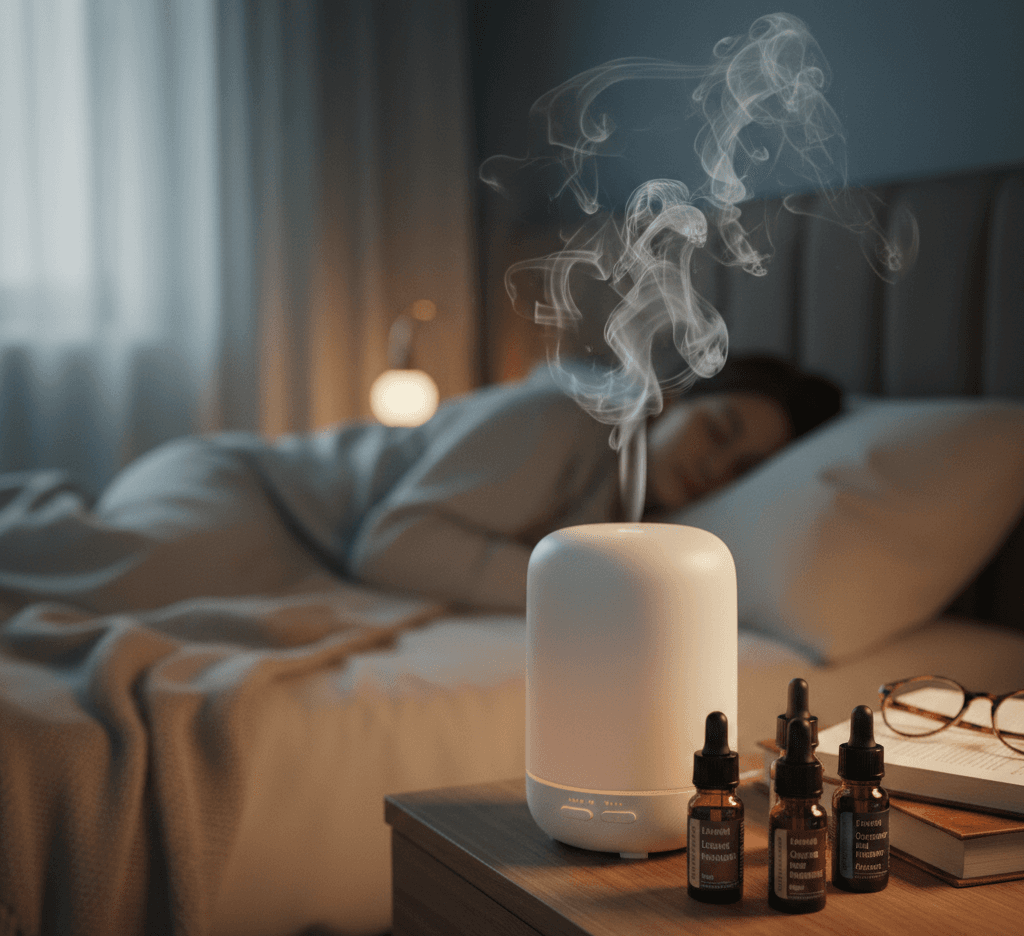
Certain scents, like lavender or chamomile, have a calming effect. You can use essential oils in a diffuser or on your pillow to create a relaxing atmosphere.
6. Avoid caffeine and heavy meals
Try to avoid caffeine and large meals for a few hours before bed. Caffeine can make it harder to fall asleep, and heavy meals can cause discomfort.
7. Use mindfulness techniques
Mindfulness practices, such as meditation or focusing on your breath, can help calm your mind. Focus on what's happening in your body and mind without judging those thoughts.
8. Limit light exposure
Avoid the blue light emitted by screens for at least an hour before bed. Instead, use dim lighting to help your body produce melatonin.
Using these techniques can make it much easier to fall asleep quickly. Everyone is different, so it's worth trying a few methods to find the ones that work best for you.