


The choice of fabric for everyday use – whether for bedding, clothing or textile accessories – plays a key role not only for its looks but for comfort in use. Among the materials available on the market, satin cotton is becoming ever more popular. Why? Because it is a fabric that joins the classic, natural structure of cotton with the elegant look of satin, offering a unique combination of comfort, durability and a luxurious finish.
In this article we discuss in detail what satin cotton is, how it is produced, what properties it has and how it differs from ordinary cotton.
Guide
Satin as a material
What is a satin weave?
Satin cotton: what is it?
Satin cotton versus ordinary cotton
Satin cotton versus polyester satin
The pros and cons of satin cotton
Summary
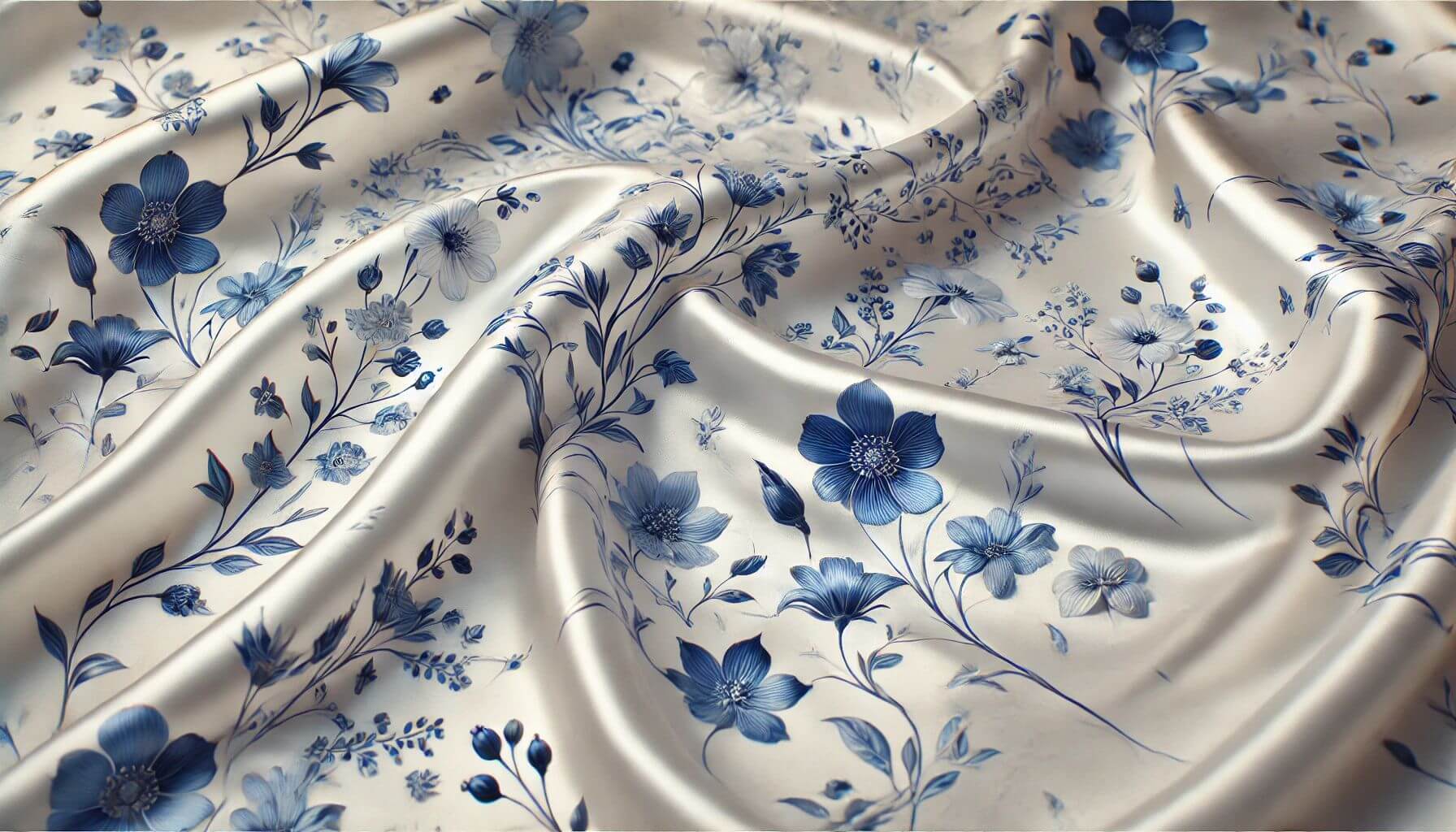
Satin as a material
Satin is a term used for a specific type of fabric weave that gives the material its characteristic sheen and smoothness. Satin is not in itself a material but only a method of weaving fibres, which can be made from various raw materials such as cotton, polyester, silk or viscose. Satin cotton is therefore a fabric made from cotton fibres woven with a satin weave. By comparison, polyester satin is a fabric made from synthetic (polyester) fibres, but woven in the same way as the cotton version.
What is a satin weave?
Before discussing satin cotton in detail, it is worth looking at the satin weave itself. The satin weave is one of the basic types of weaving, alongside the plain weave (used in ordinary cotton) and the twill weave (used in fabrics such as denim). The satin weave is characterised by weft threads (horizontal) or warp threads (vertical) running over long stretches on the surface of the fabric, which gives it its characteristic sheen and smoothness.
It is thanks to this weave that the fabric gains a sheen on one side, while the other side is more matt. Depending on the material the threads are made from, the properties of the fabric can differ significantly. That is why satin cotton, despite its lustrous surface, differs from polyester or silk satin.
Satin cotton: what is it?

Satin cotton is a fabric made from 100% cotton using a satin weave. Cotton fibres, known for their natural properties such as breathability, softness and hypoallergenic qualities, are woven in a way that gives them the lustrous appearance typical of satin.
Thanks to this weaving technique, satin cotton combines the advantages of cotton with the elegant finish of satin. On one hand we have a natural, breathable fabric that is gentle on the skin; on the other, a material that looks more luxurious thanks to its sheen and smoothness.
Satin cotton versus ordinary cotton
The main differences between satin cotton and ordinary cotton follow from the way the threads are woven. Ordinary cotton is woven with a plain weave, which gives it a more matt appearance and a certain "roughness" compared with satin. Satin cotton, thanks to its particular weave, is smoother and more lustrous.
The main differences between satin cotton and ordinary cotton:
Appearance: Ordinary cotton has a matt finish, while satin cotton has a characteristic sheen that lends the fabric elegance.
Structure: Satin cotton is woven with a satin weave, which gives it a smoother surface. Ordinary cotton is woven with a plain weave, which makes it less smooth.
Use: Ordinary cotton is more versatile and used across a wide spectrum – everyday clothing, towels or home decoration. Satin cotton is chosen mainly where elegance counts – bedding, luxury clothing or curtains.
Price: Satin cotton is usually more expensive than ordinary cotton because of the more complex production process and its aesthetic qualities.
Satin cotton versus polyester satin
Satin can also be made from other materials, such as polyester, which gives the finished fabric entirely different properties. Polyester is a synthetic fibre with characteristics unlike natural cotton. Polyester satin, though it may look similar to satin cotton (thanks to the sheen the weave produces), has different practical properties.
The main differences between satin cotton and polyester satin:
Material: Satin cotton is made from natural cotton fibres, while polyester satin is made from synthetic fibres.
Breathability: Cotton, as a natural material, is more breathable, which means satin cotton breathes better than polyester satin. Polyester satin is less breathable and can make the skin sweat more.
Moisture absorption: Cotton absorbs moisture better than polyester, which means satin cotton will be more comfortable, especially on warm days. Polyester satin can be more "slippery" and does not absorb perspiration as well.
Strength: Polyester is more resistant to creasing and deformation, which makes polyester satin more durable in use. Satin cotton is more prone to creasing, though it offers greater comfort.
Ecology: Cotton, as a natural material, is biodegradable, whereas polyester is a synthetic fibre that is less friendly to the environment.
Price: Polyester satin is usually cheaper than satin cotton, which follows from cheaper raw materials and simpler production of synthetic fibres.
The pros and cons of satin cotton

Like every material, satin cotton has advantages and disadvantages worth considering before choosing.
Advantages:
Natural composition: Satin cotton is made from natural fibres, which makes it kind to the skin and hypoallergenic.
Breathability: Cotton is a material that breathes well, which makes satin cotton ideal for bedding that touches the skin directly.
An elegant look: Combining the satin weave with a natural material gives a fabric that looks luxurious while remaining very comfortable in use.
Disadvantages:
Greater tendency to crease: Satin cotton, like other cotton fabrics, is prone to creasing, which can call for frequent ironing.
Price: Compared with polyester satin or ordinary cotton, satin cotton can be more expensive. The higher price follows from a more complex production process that combines high-quality cotton fibres with a special satin weave. That cost may seem off-putting at first, especially set against cheaper alternatives.
It is worth remembering, though, that the higher price goes hand in hand with the quality and durability of the fabric. Satin cotton is an investment that will certainly pay off in the longer term. Thanks to natural cotton fibres the fabric is kind to the skin, breathable and delicate, which matters enormously for bedding. Choosing satin cotton for bedding is investing in your comfort and health.
Satin cotton not only provides exceptional comfort during sleep but is also durable – it stands up well to repeated washing and, with the right care, will serve for many years while keeping its looks. Unlike synthetic fabrics, which can wear out faster, satin cotton retains its properties, which makes it a long-term choice.
Summary
Satin cotton is an ideal combination of elegance and function. Thanks to its particular weave, this fabric joins the advantages of cotton – breathability, softness and hypoallergenic qualities – with the luxurious sheen of satin. Compared with polyester satin, satin cotton offers greater comfort, though it can be less durable and more expensive. The choice between these fabrics depends on individual needs – if naturalness and comfort are the priority, satin cotton will be the best choice.
Despite the higher price, satin cotton is worth investing in, particularly for bedding. Your comfort, the quality of your sleep and the look of your bedroom are aspects that directly affect quality of life. Investing in top-quality materials such as satin cotton is investing in your own comfort and health.