Dreams of war, battles, explosions and being wounded are among the most exhausting experiences the bedroom can bring. Most people, waking with a pounding heart after a night-time battle, reach for a traditional dream dictionary in search of a metaphysical meaning. From the perspective of modern neurobiology and sleep medicine, though, the war dream dictionary is not a collection of symbols but the manifestation of a physiological fault in the body's recovery system.
In this article we leave mystical interpretations behind to look at hard facts: how thermal stress, tactile noise and a lack of olfactory hygiene force your brain to build battle scenarios.
A dream about war: what is "war" in your head?
Before we get to solutions, we need to understand how the nightmare arises. Sleep is not a state in which the brain switches off but a period of intense work, particularly in the REM (Rapid Eye Movement) phase. That is when emotional memory is consolidated.
The amygdala under fire
Under normal conditions the brain processes everyday stresses and "files" them in long-term memory. When we go to bed with a high level of cortisol, however, our amygdala – the centre responsible for detecting threats – remains overactive.
If your body cannot enter deep (NREM) sleep, the brain stays in "hypervigilance" mode. Every smallest external stimulus – noise outside the window, too high a temperature, a rough bedding fabric – is then interpreted by the amygdala as an attack. The brain, with no access to logical thinking (which is switched off in the REM phase), builds the most rational threat scenario available to it: war.
Tactile noise: why does bedding "wound" us in a dream?
Skin is our largest sensory organ. It has millions of mechanoreceptors that send data to the brain even while you sleep. If your bedding is rough, "scratchy" or – worse – builds up static (typical of cheap textiles), your nervous system is constantly bombarded with micro-signals of pain.
War dream dictionary: from micro-irritation to a battle wound
In the REM phase these micro-signals become the basis for the dream's narrative. If the material irritates your skin, the brain can interpret it as bullet wounds, scratches or contact with an enemy. That is where dreams of being wounded in war or of trying to stem bleeding come from.
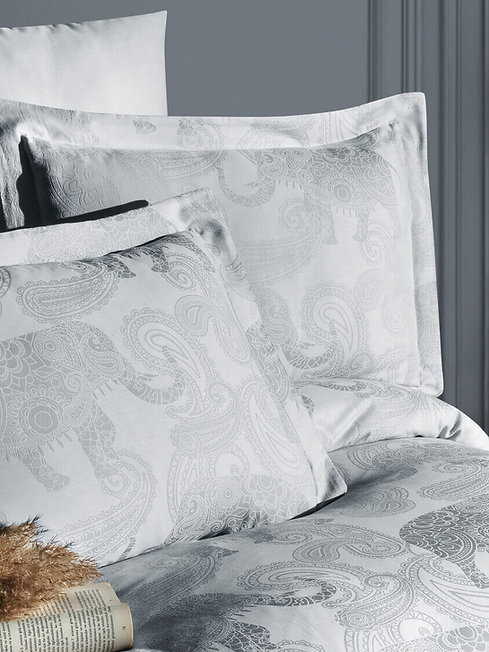
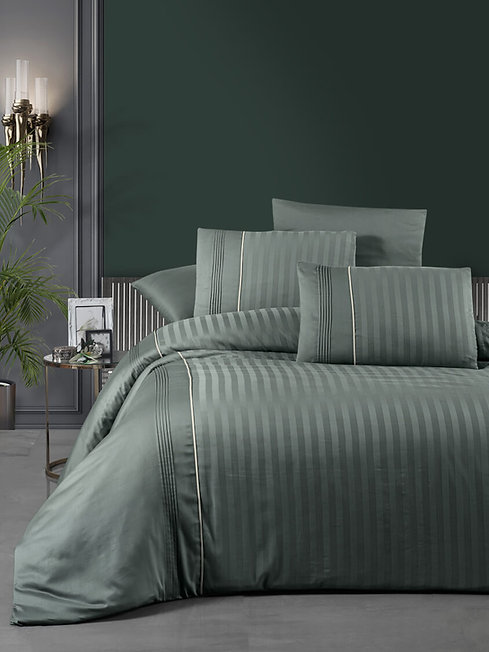
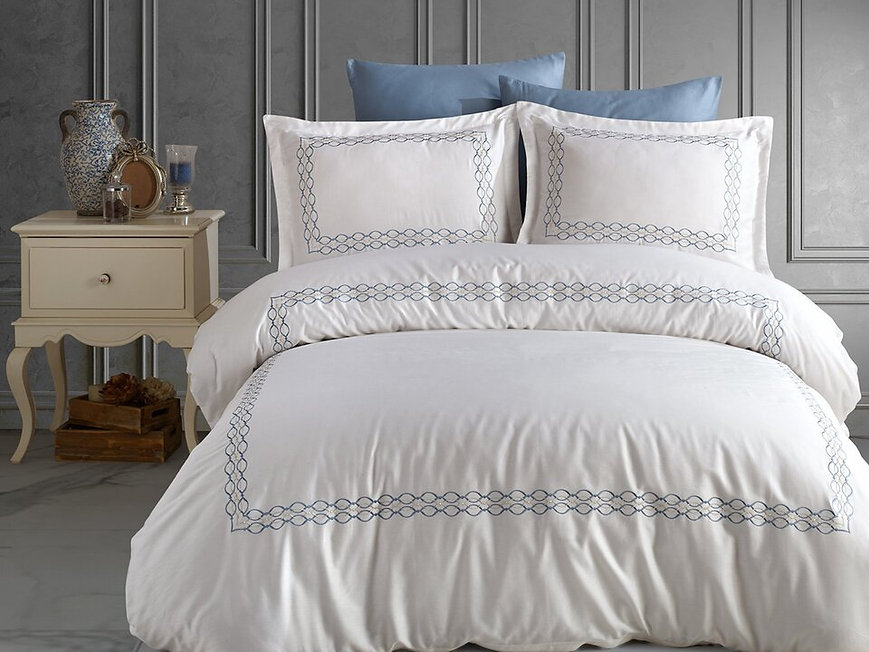

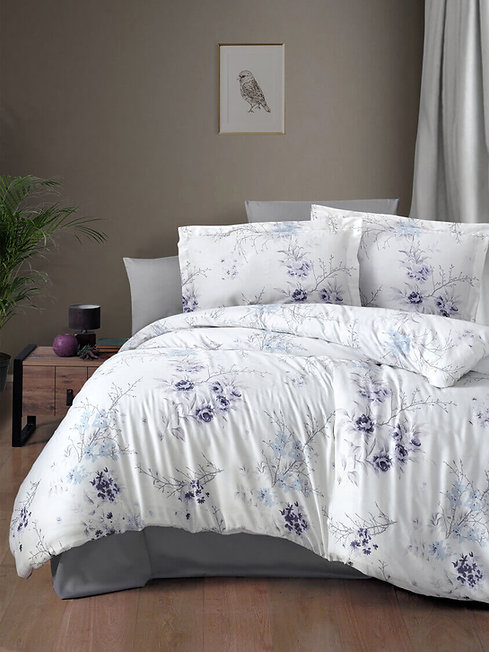
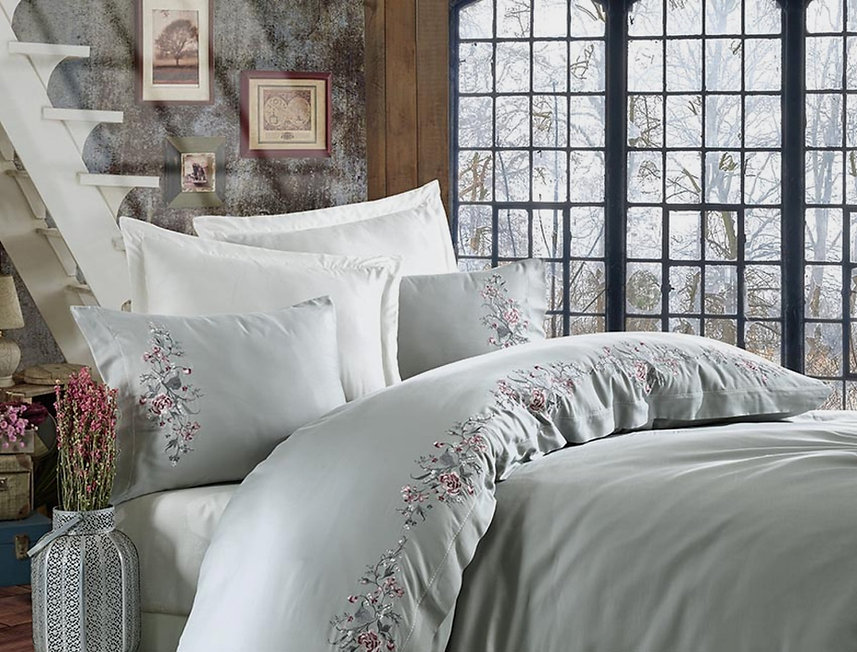
An investment in touch
Professional textiles such as premium satin cotton or embroidered bedding eliminate this "tactile noise". The smoothness of the fibre means the skin's receptors are not activated by friction. For your brain that means no danger signals, which lets it move on to anabolic processes – rebuilding cells instead of planning a defence against an "attack" by the fabric.
Discover the damask bedding collectionThe olfactory hack: a diffuser as an anti-war system
Smell is the only sense with a direct connection to the limbic system, bypassing the neocortex. That means aromatherapy is not a "nice scent" but a direct influence on your brain chemistry.
Switching off "fight or flight" mode
When you dream of war, your sympathetic nervous system is running at full tilt. To switch it off you need a stimulus that forces the parasympathetic system to take over. Using a diffuser with the right oils is the technical solution to this problem:
Lavender: It contains linalool, scientifically shown to lower the activity of neurons in the amygdala.
White Tea: It reduces oxidative stress and helps quieten the racing thoughts (the so-called monkey mind) that are often the prologue to war dreams.
Amber & Lily of the Valley: It builds a sense of stability and weight (so-called grounding), which prevents anxious waking during the night.
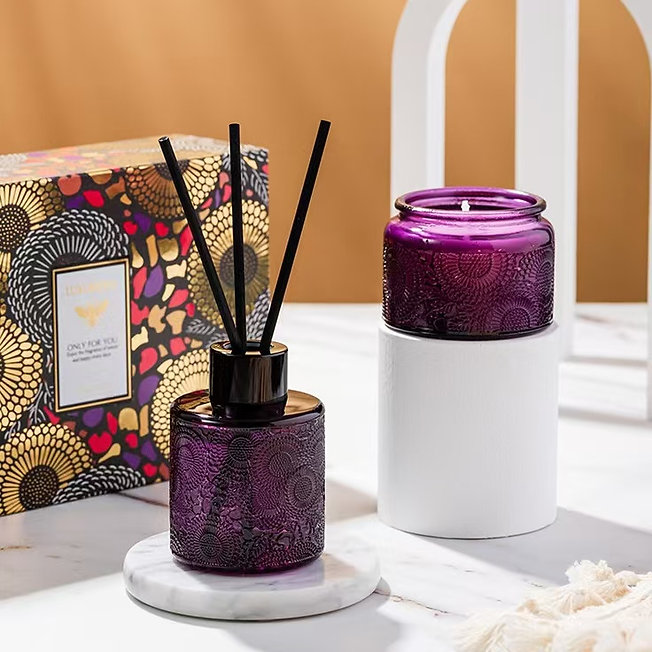
A diffuser running continuously saturates the air with micro-particles that stabilise your emotional state with every breath. It is like installing a fire-protection system in your subconscious.





The psychology of space: from battle to peace
War in a dream is often a metaphor for a lack of boundaries in real life. If your bedroom is cluttered, full of devices emitting blue light and fitted out with poor-quality textiles, you are sending your brain the signal: "This is not a place for rest, it is a battlefield for survival."
Beauty as a biological function
What you see and touch before falling asleep programmes your night. Choosing luxurious damask bedding in muted colours or jacquard sets with a fine texture is an act of self-therapy. The beauty of the bedroom is a visual signal to the brain that the hierarchy of needs has been satisfied and it can move into the phase of deep rest.
Summary: a victory that begins under the duvet
Understanding that a dream about war is the result of physiological stress rather than destiny gives you remarkable power over your own health. You do not have to be a victim of your own nightmares. You can "switch them off" by optimising the environment in which you sleep.
Your strategy for a peaceful night:
Eliminate thermal stress: Get rid of synthetics. Invest in natural damask, satin or Egyptian cotton. Let your body cool naturally.
Quieten the nervous system: Choose smooth, luxurious fabrics that remove tactile anxiety stimuli.
Apply a chemical block to stress: Start a diffuser with a soothing aroma to restore neurochemical balance in your brain.
Dreams of war are only an error in your body's interpretation. Fix it by choosing the highest quality textiles and professional aromatherapy. Turn the battlefield into a luxurious oasis of recovery. Your mental health begins where discomfort ends.